
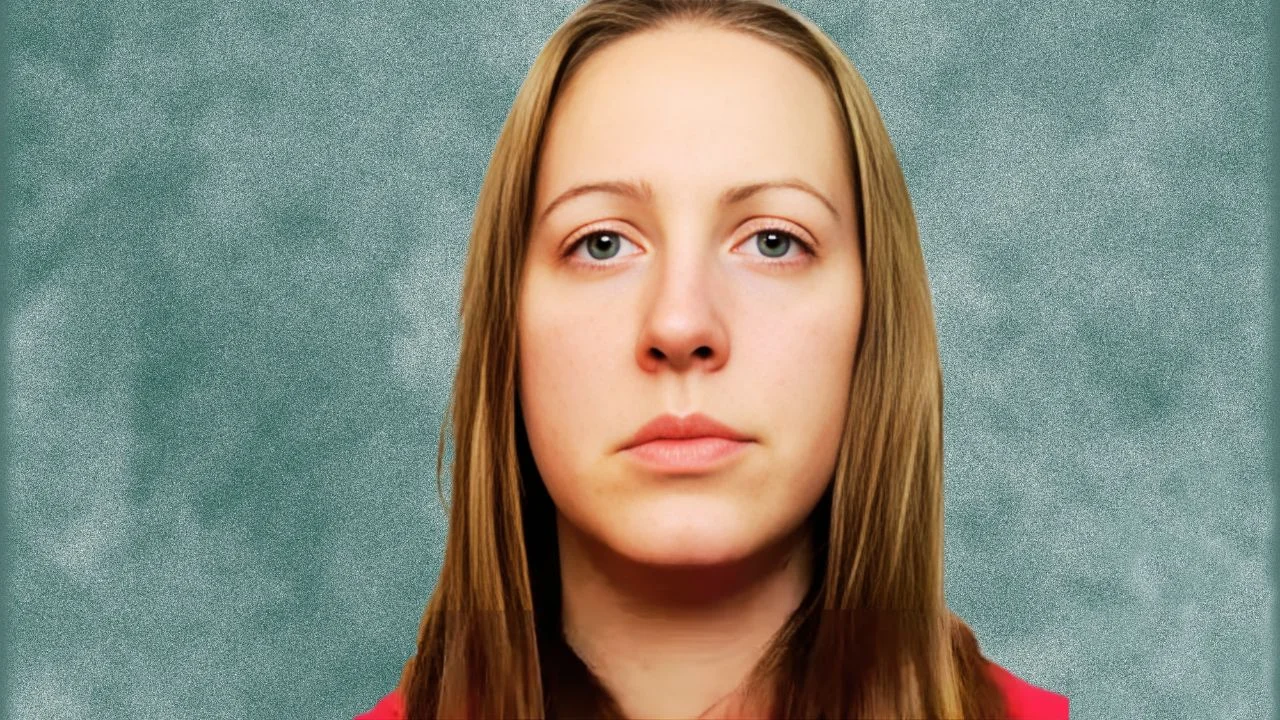
Netflix has once again stepped into the disturbing and emotional world of true-crime documentaries with its latest release, The Investigation of Lucy Letby, a 90-minute film that premiered worldwide on February 4, 2026, on Netflix.
The documentary looks closely at one of the most troubling criminal cases in modern Britain, involving neonatal nurse Lucy Letby, whose conviction has created serious debate among lawyers, doctors, journalists, and the wider public. Since its release, the film has restarted difficult conversations about justice, evidence, and whether this documentary really deserves to be called the scariest Netflix documentary so far.
The Lucy Letby case is not new for television audiences. Several broadcasters have already covered her story, including documentaries from BBC and ITV. However, Netflix’s version promises something different. It offers rare and detailed access to police material, arrest footage, and accounts from people directly involved in the investigation. This new access has created strong public interest, but it has also brought heavy criticism, making the documentary one of the most talked-about true-crime releases on the platform.
Understanding the Lucy Letby Case: Background and Context
Lucy Letby was born in Hereford, England, on January 4, 1990. She later studied children’s nursing at University of Chester, where she completed a Bachelor of Science degree. During her training, she was placed at the Countess of Chester Hospital, and after graduating, she began working there full-time in the neonatal unit.
Between June 2015 and June 2016, the hospital’s neonatal unit saw a worrying rise in unexpected baby deaths and sudden medical collapses. In 2023, Letby was found guilty of murdering seven babies and attempting to murder six more. This made her one of the most prolific convicted child killers in British legal history.
Her court case lasted 145 days, making it one of the longest murder trials ever held in the United Kingdom.
What makes this case especially important and troubling is the serious debate that followed the verdict. After her conviction, a number of medical specialists, legal professionals, and investigative journalists began raising doubts. They questioned whether the evidence presented in court was strong and reliable enough to support such serious conclusions. These doubts, and the growing public disagreement about what really happened, form the central focus of Netflix’s documentary.
What Netflix’s Documentary Offers: Unprecedented Access and Controversial Approaches
The Investigation of Lucy Letby separates itself from earlier documentaries by offering what the producers describe as “unprecedented access” to the police investigation. The 90-minute film includes material that has never been shown before, giving viewers a closer look at how police built their case against the nurse.
The documentary shows unseen footage of Letby’s arrest and parts of her police interviews. It also includes discussions about the evidence and interviews with the detectives who led the investigation, hospital doctors who first raised concerns, and legal experts who hold very different views about the case.
One of the most prominent voices in the film is criminal defence barrister Mark McDonald, who is now representing Letby. He points out that there was no clear motive, no CCTV footage, and no direct eyewitness who saw her harm any baby.
The documentary also gives space to medical professionals who have publicly questioned the verdict, including Canadian neonatologist Shoo Lee. In addition, the film includes an anonymised interview with the mother of one of the babies, who speaks publicly for the first time about her experience and her role in the trial.
The Controversial Use of AI and Digital Anonymization
One of the most heavily criticised parts of the documentary is its use of artificial intelligence to hide the identities of some contributors. Instead of using traditional filming methods, the production team created digital, AI-generated characters to represent people who wanted to stay anonymous.
This choice has caused strong negative reactions from viewers and critics. Many people feel the technology distracts from the seriousness of the subject and takes attention away from the real human stories.
The documentary introduces digital characters such as “Maisie”, who is presented as Letby’s former university friend. The filmmakers also digitally placed these AI figures into old photographs with Letby, creating edited images that show them together during their university years.
Many viewers described the avatars as uncomfortable and even disturbing. Some said the visuals felt unnatural and pulled them out of the story at very emotional moments. Critics have also asked why the filmmakers did not use simpler and more familiar methods of protecting identities, such as filming silhouettes or using voice actors, especially given that the documentary deals with the deaths of newborn babies.
Examining the Documentary’s Central Argument: Guilt or Innocence
The documentary presents itself as a balanced look at both the police investigation and the court conviction. However, many viewers believe it shows Letby in a more sympathetic light than previous documentaries.
This has deeply upset some families of the babies who died.
A large portion of the film focuses on arguments made by the defence. Letby’s legal team stresses that there is no direct evidence against her. They highlight the lack of CCTV, the absence of witnesses, and the fact that no clear motive was ever proven.
The documentary also discusses handwritten notes found in Letby’s home, including phrases such as “I am evil I did this.” Rather than treating these notes as confessions, the defence argues that they show emotional distress and a mental breakdown after she was removed from her hospital duties and blamed for the incidents.
At the same time, the documentary gives space to police investigators and families of the victims who strongly maintain that Letby is guilty. The film includes explanations of how some babies may have been harmed, including claims about air being injected into bloodstreams and cases of insulin poisoning.
The tension between these two very different stories—one suggesting serious doubt and the other standing firmly behind the conviction—is what drives the documentary’s emotional impact.
Critical Reception and Viewer Response
Reactions to The Investigation of Lucy Letby have been mixed. Many viewers and critics agree that the topic is important, but they disagree about how well the documentary handles it.
On Rotten Tomatoes, the film received a relatively low rating. Several reviewers said that although the documentary shows new footage and police material, it does not go deep enough into the complex medical and scientific evidence presented during the 145-day trial.
Some critics felt the documentary relied more on emotional storytelling than on detailed analysis. The 90-minute runtime, while easy to watch in one sitting, was seen by many as too short to properly cover such a complicated and technical case.
The use of AI avatars was again one of the main complaints. Reviewers described it as distracting and questioned whether this kind of digital recreation has a place in serious investigative journalism. Some expressed concern that this could become a trend that damages public trust in future true-crime documentaries.
Is It Really Netflix’s Scariest Documentary?
Deciding whether The Investigation of Lucy Letby is Netflix’s scariest documentary depends largely on how people define “scary”.
In most true-crime films, fear comes from violent crimes, shocking details, dangerous offenders, and clear acts of cruelty. In this case, the fear is more emotional and psychological.
The deaths of newborn babies are deeply upsetting, and the vulnerability of the victims makes the story especially hard to watch. On top of that, the continuing public debate about whether Letby is guilty or innocent adds a disturbing level of uncertainty.
The documentary creates a different type of fear. It raises the possibility that an innocent person could be in prison for life. At the same time, it also raises the possibility that a truly guilty person might have been convicted based on flawed or incomplete evidence. Both ideas are deeply unsettling.
Still, Netflix has produced many other true-crime documentaries that may feel more immediately frightening to viewers. Stories involving serial killers, abductions, and clear patterns of violence often feel more traditionally “scary” than a legal and medical investigation.
What makes this documentary particularly disturbing is not fear of a criminal, but fear about the justice system itself.
The Broader Implications: Questions About Justice and Evidence
Beyond entertainment, the documentary raises serious questions about how criminal cases are built and judged. It highlights the difficulty of using medical evidence in court and the challenges of proving responsibility in complex hospital environments.
The case shows the tension between expert opinions, legal standards of proof, and public pressure. It also raises concerns about how easily people can place trust in systems that may not always be able to handle highly technical evidence.
An article published by The New Yorker, which was temporarily blocked in the UK during legal proceedings, explored other possible factors that may have contributed to the deaths. These included staff shortages and hygiene problems within the hospital’s neonatal unit. This wider context suggests that systemic and environmental issues may have played a larger role than was fully examined during the trial.
The documentary also explains that the legal process is still ongoing. Mark McDonald has submitted an application to the Criminal Cases Review Commission. The commission will decide whether there is enough new information to justify sending the case back to the courts. This process could take many years.
Reactions from Those Closest to the Case
The release of the documentary caused strong emotional reactions from people directly connected to the case.
Letby’s parents publicly criticised the film, especially the use of private police body-camera footage. Susan and John Letby described the documentary as a serious invasion of their privacy and said that watching it would be emotionally unbearable for them.
They were particularly distressed by scenes filmed inside their family home, where they had lived for more than forty years. They also objected to footage showing their daughter saying goodbye to her pets before being taken into police custody. For them, these moments crossed an ethical line.
On the other side, families of the babies who died may see the documentary as a way to ensure their children’s stories are not forgotten. The inclusion of an anonymised interview with one mother suggests that some families were willing to take part, even though their identities remain protected.
Comparing “The Investigation of Lucy Letby” to Other Netflix True Crime Offerings
Netflix has released many true-crime documentaries over the years, and some of them have received far greater praise and public attention.
Many of the platform’s most successful titles have focused on unknown cases or have uncovered major new information. In contrast, much of the basic information about the Lucy Letby case was already public by the time this documentary was released.
Despite its rare access to police material, the documentary may feel less surprising for viewers who closely followed the trial.
However, what clearly sets this film apart is its decision to openly question a conviction. This places Netflix directly inside the wider global discussion about wrongful convictions, institutional failures, and the limits of legal certainty.
Whether this makes the documentary more frightening depends on how viewers personally react to uncertainty and doubt.
The Question of Scariness: What Makes True Crime Documentaries Frightening
True-crime documentaries can be frightening in different ways.
Some are scary because of graphic crimes and shocking behaviour. Others are frightening because they reveal how fragile justice systems can be, and how easily lives can be destroyed by mistakes.
The Investigation of Lucy Letby mainly belongs to the second group.
Rather than focusing on violent images or dramatic crime scenes, it focuses on uncertainty. It asks viewers to consider the possibility that a life sentence could be based on evidence that some experts believe is flawed or misunderstood.
For viewers who enjoy dramatic crime stories, the documentary may feel slow and heavily focused on discussion. For those interested in how courts, experts, and investigators make life-changing decisions, the film offers deeply uncomfortable and thought-provoking material.
Streaming Availability and Where to Watch
The Investigation of Lucy Letby is available exclusively on Netflix and was released worldwide on February 4, 2026.
The documentary has a TV-14 rating. While it does not show graphic violence, it discusses the deaths of newborn babies, which many viewers may find emotionally distressing.
The 90-minute runtime makes it easy to watch in a single sitting. Netflix also provides several language and subtitle options, including English (UK), English (US), German, Spanish (Latin America), French, and Italian.
Conclusion: Is It Really the Scariest Netflix Doc?
In conclusion, The Investigation of Lucy Letby is an important and highly controversial addition to Netflix‘s true-crime collection. Whether it is the scariest documentary on the platform depends on how viewers personally define fear.
For audiences who expect shocking crimes and clear villains, this documentary may not feel especially frightening. However, for viewers who are disturbed by the idea that justice systems can fail, and that innocent people could be wrongly convicted, the film is deeply unsettling.
The documentary’s biggest contribution is not new evidence, but its use of previously unseen footage and its willingness to present serious doubts about a completed trial. At the same time, the use of AI-generated avatars has damaged the film’s credibility for many viewers and distracted from its journalistic purpose.
Ultimately, this documentary may not be Netflix’s scariest release, but it is one of its most uncomfortable. It forces viewers to think about evidence, responsibility, and how easily confidence in legal decisions can be shaken.
With legal reviews still underway and expert opinions continuing to challenge parts of the original case, the story of Lucy Letby is far from finished. Future documentaries may yet provide clearer answers to a case that remains one of the most troubling and emotionally charged in recent British history.