
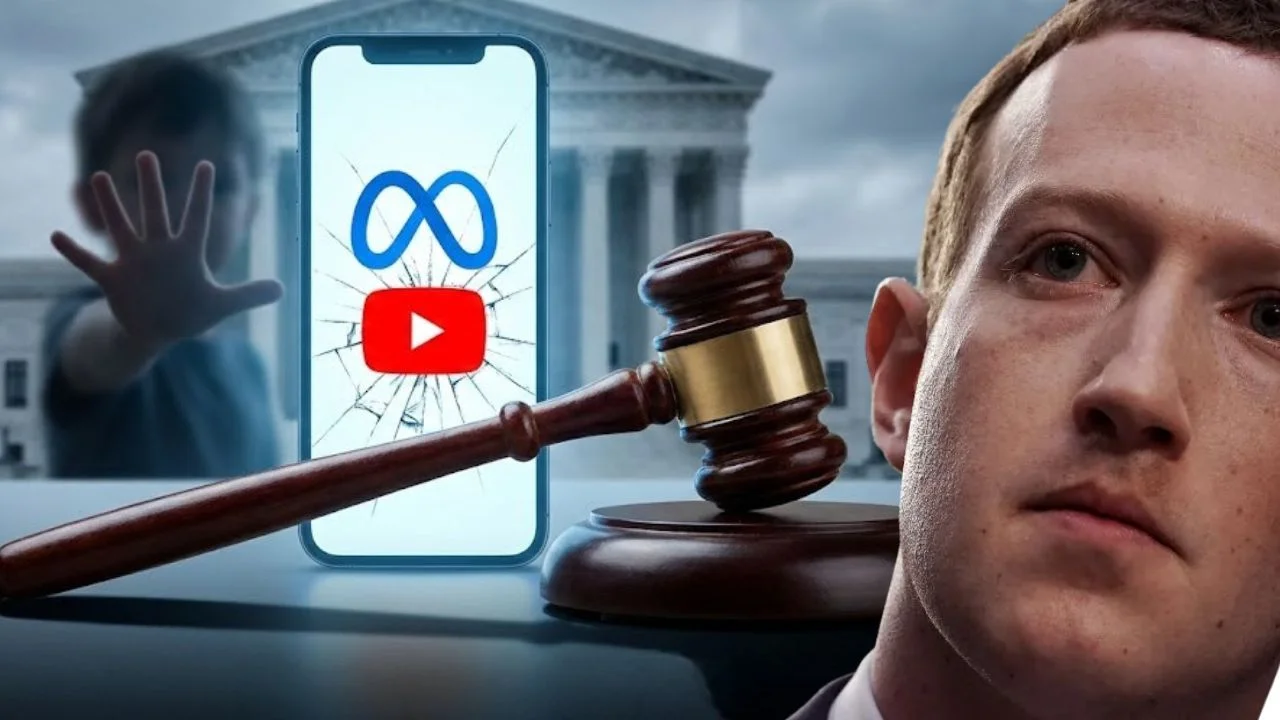
For the first time in history, Meta and YouTube are standing trial before a jury — accused of deliberately engineering addiction in children’s brains. Here’s everything parents need to know.
Imagine handing a slot machine to your 10-year-old and walking away. Now imagine that the company that made it knew — from its own internal research — that the machine was specifically designed to hook children. And they did it anyway.
That, in simple terms, is what plaintiffs are alleging in the most important tech trial of this generation.
In January 2026, a landmark trial began in Los Angeles County Superior Court that could fundamentally change how social media platforms operate — and how accountable Big Tech can be held when children get hurt. At the center of it all: Meta (the company behind Instagram and Facebook) and Google’s YouTube.
“This is the first time that a social media company has ever had to face a jury for harming kids.” — Matthew Bergman, Social Media Victims Law Center (as reported by AFP/TechXplore, February 2026)
What Is This Trial About?
The case is part of a massive consolidated lawsuit known as JCCP 5255, which brings together thousands of plaintiffs — parents, school districts, and young people — who allege that social media companies deliberately designed their platforms to be addictive to children and teenagers.
The central plaintiff is identified only by her initials, KGM, to protect her privacy. She is currently 20 years old. According to court documents reported by NBC News, she began watching YouTube at the age of 6 and had accounts on Instagram, Snapchat, and TikTok by the time she was 14. Her lawsuit alleges that her use of these platforms from such a young age addicted her to the technology and worsened her depression, anxiety, body dysmorphia, and suicidal thoughts.
What makes KGM’s case particularly powerful is this: it was not just that she stumbled onto harmful content. The lawsuit argues that the companies made deliberate design choices — features like infinite scrolling, autoplay videos, algorithmic recommendations, and social validation tools like likes and notifications — all of which were engineered to maximize how long children spent on the platforms, even at the cost of their mental health.
What About TikTok and Snapchat?
The lawsuit originally named four major social media companies: Meta, Google’s YouTube, Snap (the owner of Snapchat), and ByteDance (the parent company of TikTok). However, according to reporting by NPR, both Snap and TikTok settled their cases with the plaintiff just before the trial began, for undisclosed amounts.
The trial proceeding in Los Angeles therefore focuses solely on Meta and YouTube — two of the most widely used platforms among children worldwide.
The “Slot Machine” Argument: What Are Parents Being Told in Court?
The opening statements in this trial have been striking. Lead plaintiffs’ attorney Mark Lanier told the jury in plain terms what this case is really about. As reported by Storyboard18 from court proceedings:
“This case is about two of the richest corporations in history who have engineered addiction in children’s brains. They don’t only build apps; they build traps.” — Mark Lanier, Plaintiffs’ Attorney (as reported in court proceedings, February 2026)
The lawsuit makes a pointed comparison to two industries known for knowingly selling harmful products. According to court documents cited by CBS News and PBS News, the plaintiffs argued that the companies borrowed heavily from the behavioral and neurobiological techniques used by slot machines and the cigarette industry — techniques specifically designed to maximize engagement, not user well-being.
Jurors were also shown internal company documents. According to Storyboard18’s court reporting, one internal document presented in court contained the line: “The goal is not viewership, it’s viewer addiction.” Another internal reference reportedly read: “If we want to win big with teens, we must bring them in as tweens.”
The attorney also told jurors that KGM started watching YouTube at age 6 because the company never told her mother that toddlers as young as two were being targeted as users, and that the company’s goal was what the plaintiff’s side described as viewer addiction. As reported by TechXplore from the courtroom: Lanier told jurors that the companies understood, as the cigarette industry did a generation earlier, that a child user today becomes an adult user tomorrow.
The Specific Features Being Challenged — What Parents Should Know
For parents, the most eye-opening part of this trial is the list of specific platform features that plaintiffs are arguing were deliberately designed to hook children. According to reporting from Storyboard18 covering court proceedings, these features include:
- Infinite scrolling — feeds that never end, eliminating any natural stopping point
- Autoplay video — the next video starts automatically before the child decides to keep watching
- Algorithmic recommendations — personalized content feeds that get more and more effective at keeping users engaged
- Social validation mechanics — likes, shares, and comment counts that trigger dopamine responses in the developing brain
- Constant notifications — alerts that pull children back to the app even when they are trying to step away
- Suggested connections to strangers — features that recommended unknown users including, the lawsuit alleges, predatory adults
According to CNN’s coverage of the trial, the lawsuit states that these design choices enabled children to evade parental consent tools, and that the compulsive use they created corresponded directly with declining mental health in the plaintiff.
Mark Zuckerberg Is Expected to Testify
One of the most significant moments in this trial will be the testimony of Meta CEO Mark Zuckerberg. According to both NPR and CBS News, Zuckerberg is expected to take the stand, along with Adam Mosseri, the head of Instagram. This will be a rare moment of public accountability for the executives who built the platforms that billions of children use every day.
The trial is expected to last six to eight weeks, according to CBS News. Thousands of pages of internal documents — including research conducted by the companies on children — will be presented to the jury.
What Do Meta and YouTube Say in Their Defense?
Both companies have strongly denied the allegations. Here is their official position:
Meta: In a public statement cited across multiple outlets including NPR and CNN, Meta said the lawsuits misportray the company and the work it does to provide young people with safe, valuable experiences online. The company stated it has listened to parents, researched the issues that matter most, and made real changes to protect teens, and that it is proud of its record of putting teen safety first.
YouTube / Google: Google spokesperson José Castañeda told CNN that the allegations in the lawsuits are simply not true. He stated that providing young people with a safer, healthier experience has always been core to the company’s work, and that YouTube was built with age-appropriate experiences and robust parental controls developed in collaboration with youth, mental health, and parenting experts.
YouTube’s defense attorneys also made a notable argument in court: YouTube’s attorney Luis Li told jurors that the platform is fundamentally a video streaming service — more like television than a social network — and therefore the concept of social media addiction does not apply. He also challenged the specific claim that KGM herself was addicted, citing her own statements and those of her doctor and father. (Reported by Storyboard18 from court proceedings.)
Why This Trial Is a Huge Deal — Even Beyond One Case
This trial is far bigger than one girl’s story. Legal experts describe KGM’s case as a bellwether trial — meaning it is a test case designed to show both sides how their arguments hold up before a jury, and to establish what damages, if any, might be awarded. The outcome will directly shape how thousands of other similar cases proceed.
According to PBS NewsHour, the lawsuits represent a potentially significant challenge to two major legal shields that tech companies have historically relied upon:
- Section 230 of the Communications Decency Act — the law that typically protects social media companies from being held liable for content posted by users. Plaintiffs are arguing that their case is about design decisions, not content — which could sidestep this protection entirely.
- First Amendment protections — which tech companies have used to argue that regulating their platforms amounts to restricting free speech. Again, the design-focused approach of the lawsuit attempts to bypass this argument.
Eric Goldman, a law professor at Santa Clara University School of Law, told PBS News: “So much of the case turns on the concept that social media services have deliberately designed their offerings in a way that addicts users. They’re saying that the social media services should have designed their offerings differently.”
Just How Many Lawsuits Are We Talking About?
The scale of this legal battle is staggering. According to reporting from CBS News and NBC News:
- More than 40 state attorneys general have filed lawsuits against Meta, claiming the company deliberately designed features on Instagram and Facebook that addict children to its platforms.
- The Social Media Victims Law Center alone is involved in more than 1,000 similar cases.
- In 2025, 20 U.S. states enacted new laws concerning social media and children, according to the National Conference of State Legislatures.
- TikTok faces similar lawsuits in more than a dozen individual U.S. states.
A separate lawsuit is also underway in New Mexico, where the state’s attorney general is accusing Meta of failing to protect young users from sexual exploitation — following an undercover investigation. This trial is running simultaneously to the California case.
The Global Picture: Laws Are Changing Fast
The California trial is not happening in isolation. Around the world, governments are taking increasingly aggressive action to protect children from social media harm:
- Australia became the first country in the world to ban children under 16 from social media platforms. Since the ban took effect, Australian social media companies have reportedly revoked access to approximately 4.7 million accounts identified as belonging to children, according to CBS News.
- France — In January 2026, French lawmakers approved a bill banning social media for children under 15, with the law expected to take effect in September 2026.
- Denmark is reportedly considering similar legislation.
- The United States — The U.S. Surgeon General has called for warning labels on social media platforms, similar to those on cigarette packs.
Australia, France, Denmark, and now the courts of California — governments worldwide are sending the same message: Big Tech can no longer hide behind algorithms when children are being hurt.
What Does This Mean for You as a Parent — Right Now?
The trial is still ongoing as of publication. A verdict could be months away. But regardless of how the jury rules, there are things you can do today to protect your child.
1. Understand That These Platforms Were Built to Be Sticky — By Design
This trial is confirming what many parents already suspected. The features your child uses every day — the autoplay, the endless scroll, the notifications — are not accidental. They are engineering. Knowing this should change how you set rules around screen time in your home.
2. Use Every Parental Control Available
Both Meta and YouTube offer parental control tools. YouTube has a separate YouTube Kids app and recently introduced an option for parents to limit or block their kids from its short-form video feed (Shorts). Instagram has “Teen Accounts” with built-in restrictions. These are not perfect, but they are better than nothing.
3. Talk to Your Child About What They Are Watching
The plaintiff in this case started watching YouTube at age 6 while her mother was unaware of what the platform’s goals were. The best protection you can give your child is an open, ongoing conversation about what they see online, how it makes them feel, and what to do when something bothers them.
4. Know the Warning Signs
Watch for mood changes after using social media, sleep disruption, social withdrawal, declining grades, negative body image talk, and signs of cyberbullying. These are documented warning signs that social media may be affecting your child’s mental health.
5. Stay Informed as the Trial Continues
This trial is expected to last six to eight more weeks. The verdict — and especially any appeals — will likely shape laws and platform policies for years to come. Follow reliable news sources for updates.
Final Word
Whether or not the jury sides with the plaintiffs, this trial has already done something important: it has forced the most powerful tech companies in the world to sit in a courtroom and answer for what their products did to children. Internal documents are being unsealed. Executives are being called to testify. The curtain is being pulled back.
For parents, that is not a legal story. It is a wake-up call.
The platforms your child uses every day were not built for their well-being. They were built for engagement. And engagement, as thousands of families are now telling courts across America, came at a devastating cost.
⚠️ This article is a news report for informational purposes only. It does not constitute legal or medical advice. If you are concerned about your child’s mental health, please consult a qualified healthcare professional.
References
1. NPR — Meta and YouTube Head to Trial Over Harm to Children After TikTok Settles (Jan 27, 2026): https://www.npr.org/2026/01/27/nx-s1-5684196/social-media-kids-addiction-mental-health-trial
2. CNN Business — Meta and YouTube Head to Trial to Defend Against Youth Addiction Claims (Jan 26, 2026): https://www.cnn.com/2026/01/26/tech/social-media-youth-mental-health-trial
3. CBS News — Meta, YouTube Face Trial Over Youth Addiction and Mental Health (Jan 2026): https://www.cbsnews.com/news/meta-tiktok-youtube-trial-social-media-addiction-mental-health/
4. CBS News — Social Media Companies Accused of ‘Addicting the Brains of Children’ as Trial Begins (Feb 2026): https://www.cbsnews.com/news/meta-google-youtube-social-media-addiction-trial-los-angeles/
5. NBC News — Landmark Trial Accusing Social Media Companies of Addicting Children Begins (Feb 9, 2026): https://www.nbcnews.com/business/business-news/arguments-begin-landmark-social-media-addiction-trial-set-los-angeles-rcna258157
6. PBS NewsHour — What to Know About the Trial Testing Tech Giants’ Liability for Child Social Media Addiction: https://www.pbs.org/newshour/nation/what-to-know-about-a-trial-that-will-test-tech-giants-liability-for-child-social-media-addiction
7. PBS NewsHour — Landmark Trial Accusing Tech Giants of Harming Children Begins (Feb 2026): https://www.pbs.org/newshour/nation/landmark-trial-accusing-tech-giants-of-harming-children-with-addictive-social-media-begins
8. TechXplore — Jury Told That Meta, Google ‘Engineered Addiction’ at Landmark US Trial (Feb 10, 2026): https://techxplore.com/news/2026-02-jury-told-meta-google-addiction.html
9. Storyboard18 — Two US Courtrooms, One Big Question: Did Meta and YouTube Design Platforms That Harm Children? (Feb 2026): https://www.storyboard18.com/how-it-works/two-us-courtrooms-one-big-question-did-meta-and-youtube-design-platforms-that-harm-children-89439.htm
10. Al Jazeera — TikTok Settles Addiction Lawsuit Before Trial Against Meta, YouTube (Jan 2026): https://www.aljazeera.com/news/2026/1/27/meta-tiktok-and-youtube-face-landmark-trial-over-youth-addiction-claims