
📋 Research-Based Guide
This guide is built from the official age certificate and its published rating reason, together with the trailer and released material. We have not screened this title ourselves, and we will not describe scenes we have not seen. We are working through our back catalogue and upgrading guides to Verified as fast as we can genuinely watch them. How we rate →
If you’ve seen the headlines comparing this new BBC adaptation to Adolescence — the darkly brilliant Jack Thorne drama that shook audiences earlier this year — and you’re wondering whether Lord of the Flies is suitable for your child to watch, this guide is exactly what you need. We’re breaking down the age rating, the content category by category, and what each episode actually contains, so you can make an informed decision without any surprises.
The short answer upfront: this is not for children — and not just because of the violence, but because of what the violence means. This is a deeply psychological, emotionally heavy piece of television that demands a mature viewer. Here’s everything you need to know.
What Is the BBC Lord of the Flies (2026)?
Adapted from William Golding’s landmark 1954 novel by Jack Thorne, Lord of the Flies was released on BBC iPlayer and BBC One on February 8, 2026, in a co-production with Stan in Australia. Sony Pictures Television confirmed in February 2026 that Netflix had acquired the U.S. rights. The series consists of four 60-minute episodes, each titled after one of the main characters: Piggy, Jack, Simon, and Ralph.
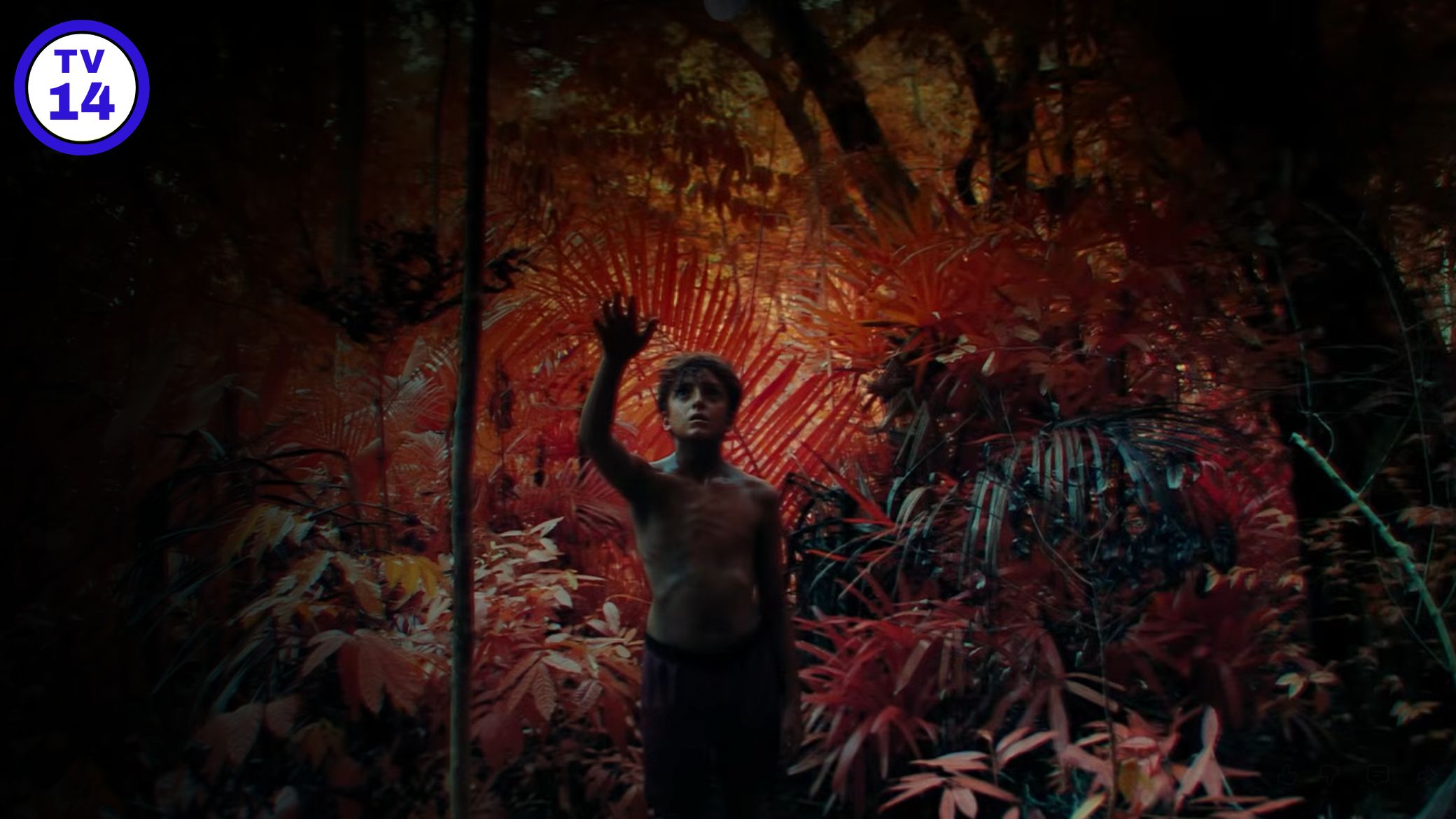
The story follows a group of British schoolboys who survive a plane crash and become stranded on an uninhabited tropical island. With no adults to govern them, they attempt to build a society — but their fragile civilization slowly collapses as fear, power struggles, and violence take over.
The adaptation was made with the support of Golding’s family, and it’s widely praised for its faithfulness to the novel while humanizing the boys beyond simple representations of good and evil. Jack gains a damaged backstory, and Simon’s character is given new emotional depth.
BBC Age Rating: BBFC 15 (UK) US Equivalent: TV-14 to TV-MA depending on region
Age Rating Explained
Lord of the Flies is not suitable for young children. Due to themes of violence, psychological distress, and moral breakdown, it is best suited for older teens and adults. The BBC aired it at 9pm on BBC One — a post-watershed slot reserved for adult programming — which tells you everything about who this show is actually designed for.
Don’t let the fact that this is a school curriculum novel fool you into thinking the show is appropriate for the same age group that reads the book. The television adaptation goes places the written page only implies, and seeing it rendered visually with real child actors and unflinching direction is a fundamentally different experience from reading it in a classroom.
⚠️ Spoiler Warning: The episode breakdown below discusses specific plot events and deaths in detail. If you haven’t watched the series yet and want to go in blind, skip ahead to the age recommendations section.
Violence and Gore
Violence is the central content concern for parents, and it escalates significantly across the four episodes. It starts grounded and relatively restrained, then builds toward two of the most disturbing death sequences you’ll see on mainstream British television this year.
In the opening episode, the violence is mostly environmental and implied — the plane crash aftermath, boys hurting each other in play that tips too far, and an early foreshadowing sequence where the boys throw a dead pilot’s body off a cliff. This moment edges into darkness earlier than the novel does, and feels like an early reveal of the savagery to come.
By Episode 2, Jack becomes consumed by the need to hunt, abandoning shared responsibilities and setting off a chain of dangerous consequences. The pig hunt scenes are visceral and deliberately unsettling — the point is that the act of killing changes these boys, and the camera doesn’t look away from that transformation.
Episode 3 delivers the show’s most chaotic act of violence. Towards the end of the episode, Simon walks into the woods alone and finds the mangled corpse of the pilot. Later, as a storm rages across the island, the other boys mistake him for the beast emerging from the bushes — and they stab him to death, leaving his body on the beach. This scene happens quickly, in darkness and frenzy, and several viewers found it genuinely difficult to follow in the moment — which, rather than being a flaw, is part of the point. It reflects exactly how mob violence actually works.
Episode 4 contains the show’s most disturbing death scene, and parents should be specifically aware of this one. Piggy is killed after Roger throws a boulder onto his head. But unlike the near-instant death in the novel, the series draws it out — Piggy bleeds out slowly for the rest of the day, vomiting and growing increasingly pale and delirious, before slipping away in his sleep. It is prolonged, emotionally devastating, and handled with a cruelty that is entirely intentional. The conch — the boys’ symbol of order and civilization — shatters at the same moment, and the image of both things breaking together is one of the bleakest moments in recent British television.
Violence erupts fully across the island in the finale, with Ralph confronting the horrifying reality that he has become the next target and is now being actively hunted by the other boys.
Other violent content across the series includes bullying, physical intimidation, a child dying in a wildfire early in the series, and the sustained psychological threat of children in real danger with no adults coming to save them.
Sexual Content and Nudity
There is no sexual content or nudity in this series. This is entirely a non-issue for parents. The adaptation adds a queer subtext to Simon’s character through his relationship with Jack, handled entirely through emotional tension and glances rather than anything physical or explicit. It’s subtle enough that younger viewers may not register it at all, and it’s handled with genuine sensitivity.
Language
Language is moderate rather than extreme. Given that the cast is entirely made up of young boys in a 1950s British setting, the dialogue stays within period-appropriate bounds for the most part. There are insults, name-calling, and moments of cruelty in the way the boys speak to each other — particularly Piggy, who is relentlessly mocked for his weight, his asthma, and his accent throughout the series. That bullying dialogue is consistent and sometimes quite sharp, which may be distressing for younger viewers who have experienced similar treatment.
Strong adult profanity is not a significant feature of the series. The show’s darkness comes through what it depicts, not how loudly it says it.
Psychological and Thematic Content
This is where the show’s deepest challenge for parents lies, and it deserves its own section.
Lord of the Flies is fundamentally a story about what human beings do when the rules disappear — and it’s unambiguous about its conclusion. The show charts the boys’ descent into wild, feral behavior while also capturing their childishness. It really does feel like a school playground transplanted onto a tropical island. The eerie music cements the feeling that when the boys are together, it sounds like a playground — but when they’re alone, or climbing the mountain, or searching for food, the sense sets in that these kids are genuinely in danger.
The beast — one of the most important elements of the story — is never a physical creature. Through Simon’s perspective, we learn that the true beast is the evil deep inside the boys that reveals itself through their madness. That’s a philosophical idea that’s heavy for younger viewers to sit with, particularly when it’s being illustrated by watching real children on screen descend into killing each other.
The adaptation also adds backstories to deepen the boys’ humanity — Jack and Simon both carry trauma from absent or abusive fathers, and Ralph grieves a sick mother, making their eventual cruelty feel more heartbreaking and human rather than cartoonishly evil. This is one of the show’s greatest strengths as a piece of drama, but it also means the emotional weight lands harder than it would in a more detached telling of the same story.
The series is also being discussed in the same breath as Adolescence because both shows are about the terrifying speed at which boys can turn brutal. Critics have suggested it would “terrify parents as much as Adolescence.” That’s not a throwaway comparison — both shows ask deeply uncomfortable questions about boyhood, violence, and what the adults in their lives either missed or failed to prevent.
Episode-by-Episode Content Breakdown
Episode 1 — “Piggy”
Piggy discovers an object that could help organize the boys, but a broken promise leaves him isolated and exposed within the group. This is the show’s gentlest episode in terms of violence, though it establishes the bullying dynamic around Piggy from the very first scene. A child dies in an accidental wildfire — the death is not graphically depicted but is clearly communicated. The early sequence where the boys throw the dead pilot off the cliff sets a disturbing tone immediately. Emotionally heavy but the most accessible of the four episodes.
Episode 2 — “Jack”
Jack becomes consumed by the need to hunt, abandoning shared responsibilities and setting off a chain of dangerous consequences. This is the episode where the pig hunt sequences intensify and the group begins to fracture in earnest. The violence is physical and deliberate, and the pleasure some of the boys take in killing is portrayed without flinching. Moderate in terms of gore, but psychologically very dark.
Episode 3 — “Simon”
As fear of a mysterious beast spreads, Simon struggles to warn the others about the truth behind their growing terror. This episode ends with Simon’s death — a frenzied, dark, and deeply upsetting sequence that many viewers found disturbing even knowing it was coming. Simon wanders into the woods, finds the mangled corpse of the pilot, and hears an eerie voice from the fly-infested pig head on a stick before the other boys kill him, mistaking him for the beast. This is the most psychologically frightening episode of the four, combining supernatural atmosphere with real mob violence.
Episode 4 — “Ralph”
Violence erupts across the island as Ralph confronts the horrifying reality that he has become the next target. Piggy’s prolonged death is the emotional centerpiece here — drawn out, bloody, and harrowing. The episode also includes Ralph being actively hunted across the island as the other boys set it on fire to flush him out. The finale plays out almost word-for-word from the novel’s last chapter, right down to the naval officer’s dialogue, making the ending feel both earned and completely devastating. This is the most violent and upsetting episode of the series.
Is Lord of the Flies Appropriate for Your Family?
Under 12: Absolutely not. The deaths, the bullying, the psychological terror, and the core message that children are capable of murdering each other without adult intervention are all deeply inappropriate for this age group regardless of whether they’ve read the book at school.
Ages 12–14: Not recommended without significant parental involvement. Some children this age may have read or studied the novel, but watching it dramatized on screen with real young actors is a different experience entirely.
Ages 15–17: This is the appropriate viewing age for the series, matching the BBC’s own BBFC 15 rating.
Ages 18+: Essential viewing for anyone who cares about what great British television can achieve. Critics have called it a first-class example of an adaptation done right, stunningly directed and a tour de force.
Official Trailer
FAQs
Q: What is the age rating for Lord of the Flies on the BBC?
A: The 2026 BBC adaptation is rated BBFC 15 in the UK and TV-MA in the US on Netflix. It is intended for mature audiences, not children.
Q: Is Lord of the Flies (2026) suitable for 12-year-olds?
A: No. The series contains bullying, intense violence, and disturbing death scenes. It is not appropriate for viewers under 15.
Q: How many episodes does the BBC Lord of the Flies have?
A: The series has four episodes, each about 60 minutes long. All are available on BBC iPlayer in the UK and Netflix in the US.
Q: Does Lord of the Flies (2026) follow the original novel?
A: Yes. It closely follows William Golding’s novel, with added character backstories but the same major events.
Q: Is there any sexual content in Lord of the Flies (2026)?
A: No. There is no sexual content or nudity in the series.
Q: Which is the most disturbing episode of Lord of the Flies?
A: Episode 4 (“Ralph”) is often considered the most disturbing due to a prolonged death scene. Episode 3 (“Simon”) is also intense.
Q: Is BBC’s Lord of the Flies the same as the 1963 or 1990 film versions?
A: No. This is a new four-part BBC miniseries, separate from the earlier film adaptations.
Q: Can Lord of the Flies (2026) be used for educational purposes?
A: Yes, but only for older teens (15+). It should be viewed with guidance due to its violent content.