
📋 Research-Based Guide
This guide is built from the official age certificate and its published rating reason, together with the trailer and released material. We have not screened this title ourselves, and we will not describe scenes we have not seen. We are working through our back catalogue and upgrading guides to Verified as fast as we can genuinely watch them. How we rate →
Everything Parents, Teens & Readers Need to Know Before Picking Up Liana Cincotti’s Beloved Romance
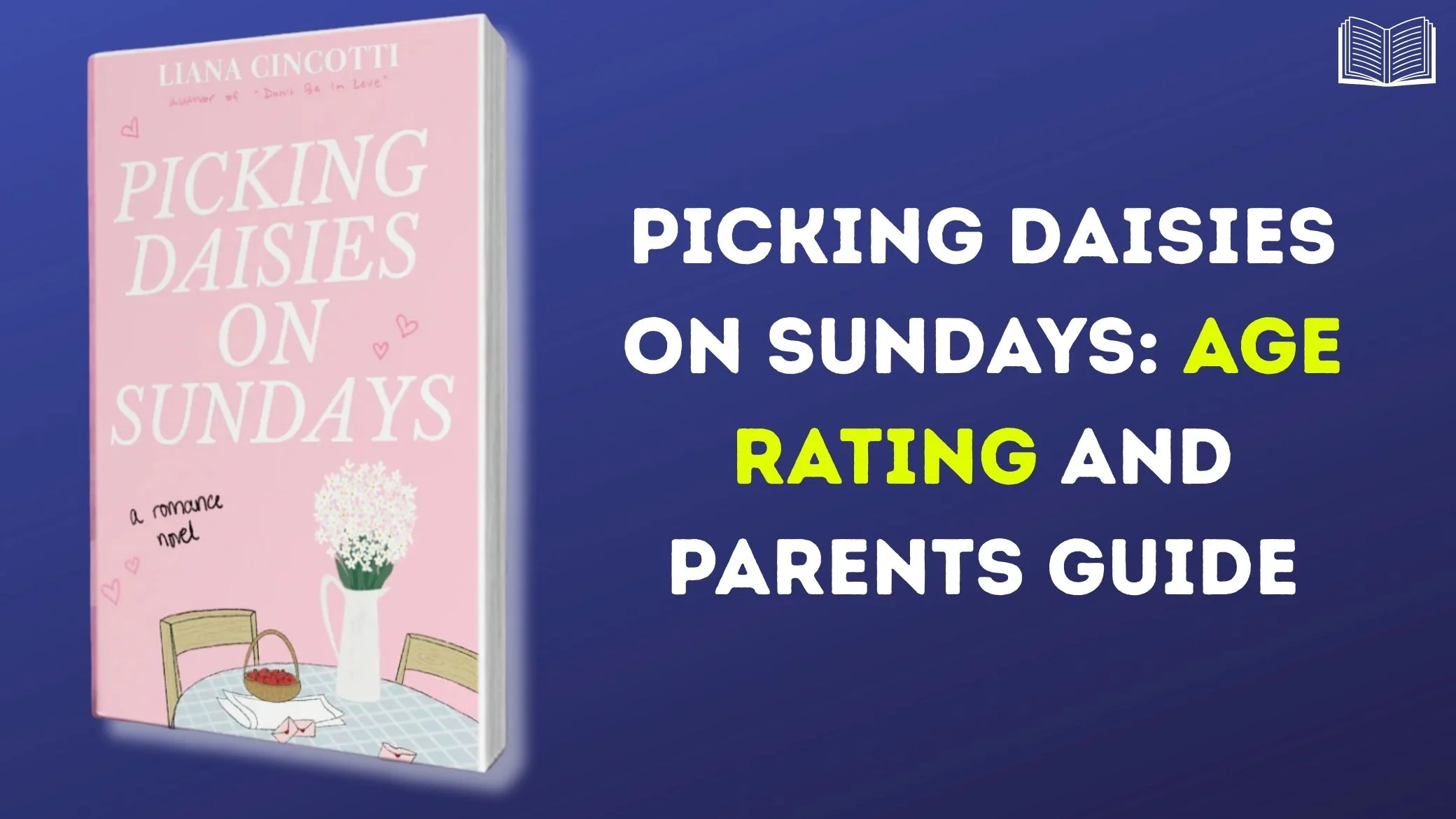
Some books drift quietly onto the scene. Others arrive like a warm Saturday morning with sunlight slipping through the curtains, a cup of tea in hand, and nowhere to be. Liana Cincotti’s debut novel Picking Daisies on Sundays is firmly the latter.
Since its release, the book has grown from an indie romance into a BookTok phenomenon — quietly passed between friends, recommended in college dorm rooms, and showing up on ‘cozy reads’ lists with the reliability of a favourite playlist. But as its readership has expanded beyond the college crowd, one question keeps surfacing: who is this book actually for, and what should parents and younger readers know before they open the cover?
Whether you’re a parent whose teenager has been eyeing this title for weeks, a younger reader deciding if it’s right for you, or simply a curious adult who wants to know what all the fuss is about, this guide covers everything. We break down the age recommendation, walk through the content in detail, and give you an honest, no-nonsense look at what’s inside.
What Is Picking Daisies on Sundays About?
At its heart, Picking Daisies on Sundays is a warm, slow-burn romance rooted in the most beloved of all tropes: childhood best friends reuniting after years apart. The story centres on Daniella ‘Daisy’ Maria, a fashion design student in the final stretch of her college years. She’s a self-confessed hopeless romantic — the kind of person who watches every rom-com ever made on a Friday night and genuinely believes in the kind of love that makes your chest ache.
Years earlier, Daisy fell hard for her childhood best friend Levi Coldwell. The feelings were overwhelming, messy, and unfortunately — or so she thought — one-sided. After a painful rejection, she buried those feelings and moved on. Or tried to. Four years later, one chance encounter at a crowded bar in New York’s West Village turns everything upside down. Levi reappears, as charming and disarming as ever, with an unusual request: pretend to be his girlfriend for his sister’s upcoming wedding.
What follows is the classic fake-dating setup — close quarters, rekindled feelings, carefully constructed walls beginning to crack. But Cincotti layers her story with genuine emotional depth. Daisy is not just a girl chasing love; she’s also quietly navigating grief after losing her father, wrestling with self-worth, and trying to figure out who she is before the chapter of college closes for good. Levi, far from being a one-dimensional love interest, carries his own quiet burdens, particularly around responsibility to his family.
The result is a story that reads like a warm hug — uncomplicated on the surface, but genuinely moving underneath.
Age Rating: What’s the Verdict?
Picking Daisies on Sundays carries a suggested reading age of 15 and above. Amazon lists the reading age as 15 to 18 years, and the broader consensus from reader communities, educators, and parenting book guides aligns with this — firmly placing it in older teen and young adult territory rather than middle-grade or early teen.
We suggest the book is accessible to mature 13 and 14-year-olds, particularly those already comfortable with young adult contemporary fiction. However, the story’s college setting, adult characters in their early twenties, and some of its more emotionally complex themes — grief, self-worth, fear of intimacy — are likely to resonate most with readers who are at least 15 or older. The experiences Daisy navigates simply hit differently when the reader has a few more years of life behind them.
It is worth noting what the book is not: it is not a ‘spicy’ or explicit romance. In the landscape of contemporary new adult fiction — where explicit content has become increasingly common — Picking Daisies on Sundays stands out for its restraint. The romance is emotional, tender, and affectionate rather than graphic. Multiple reviewers describe it as ‘closed-door’, meaning any intimate moments happen off the page entirely.
Parents Guide: Detailed Content Breakdown
Romance & Physical Content
The central relationship between Daisy and Levi is emotionally rich and physically affectionate — kissing, hand-holding, cuddling, and tender moments are all present throughout the story. That said, there are no graphic or explicit sexual scenes anywhere in the book. The physical intimacy is firmly ‘fade to black’, meaning the narrative steps away before anything explicit occurs. Parents who are concerned about younger teens encountering detailed sexual content can be reassured: none of that is here.
The book does contain intimate thoughts and feelings from the characters’ perspectives — emotional longing, desire, and romantic tension are all conveyed through internal monologue and dialogue. This is handled tastefully and is consistent with what you’d find in a mainstream young adult romance. One or two kissing scenes are described in slightly more detail than others, but nothing crosses into adult territory.
Language & Profanity
Language throughout the book is mild. Occasional casual swearing appears in dialogue — words like ‘hell’ and ‘damn’ crop up naturally in conversation — but there is no strong profanity, offensive language, or slurs of any kind. The dialogue feels authentic to how college-aged characters actually speak, while remaining noticeably cleaner than many adult romance novels in the same genre.
Emotional & Mental Health Themes
This is arguably the area that warrants the most thoughtful consideration — not because the content is harmful, but because it is handled with genuine emotional weight. Daisy has lost her father prior to the events of the novel, and her grief quietly underpins much of her journey throughout the story. The loss is touched on gently but realistically; it shapes her sense of identity, her fear of vulnerability, and her struggles with self-worth.
Daisy’s anxiety and insecurity are also recurring themes. As a fashion design student who creates beautiful things for others but struggles to feel worthy herself, her internal conflict is portrayed with sensitivity and care. This is the kind of content that, rather than being a red flag, can actually be genuinely helpful for younger readers who relate to feelings of not being enough. The story treats these emotions honestly without dramatising or exploiting them.
There is no self-harm content, no suicide themes, and no abuse portrayed in the narrative. The emotional weight in the book is ultimately one of growth, healing, and finding your way back to yourself.
Alcohol & Social Situations
As a story set largely in the college world, social gatherings and bars feature as backdrop locations. Characters attend parties and mention drinking alcohol in passing. This is presented as a normal part of young adult social life and is never glorified, depicted irresponsibly, or shown as something the story endorses. There are no scenes depicting dangerous or excessive drinking, substance abuse, or drug use.
A Note on Sexual Harassment
There is one minor content warning worth mentioning: a brief instance of unwanted touching. This is not a major plot element, but parents of more sensitive readers may wish to be aware of it. The incident is not depicted in detail, and the narrative does not treat it lightly.
What Makes This Book Special — and Safe
In a publishing landscape where ‘new adult’ romance increasingly skews toward explicit content, Picking Daisies on Sundays occupies a refreshing and somewhat rare middle ground. It’s a book that takes its romance seriously — the feelings are real, the longing is palpable, and the emotional stakes are high — without needing to rely on explicit scenes to get there.
Cincotti’s writing has been widely praised for its lyrical quality. The author — herself a university student when she self-published the novel — brings an authentic, lived-in perspective to the college experience. The result is a story that feels real rather than manufactured, populated by characters who carry genuine complexity. Levi, in particular, is the sort of male lead who has captivated readers precisely because he demonstrates love through consistent, quiet acts of care rather than grand gestures.
The book’s Goodreads rating of 4.4 stars from over 50,000 ratings speaks to how broadly it has resonated. On BookTok and Reddit’s book communities, it is repeatedly cited as the go-to recommendation for readers seeking romance that is ‘clean but emotional’ — a distinction that matters enormously to the parents and educators navigating reading choices for teenagers.
Who Should Read It — and Who Might Want to Skip It
This book is ideal for:
Teens aged 15 and above who enjoy contemporary romance. Readers who love the friends-to-lovers or fake-dating tropes. Anyone who grew up on 2000s rom-coms and misses that particular brand of wholesome storytelling. Parents looking for a romance recommendation that doesn’t come with explicit content concerns. Fans of authors like Lynn Painter and Jenny Han will feel instantly at home here.
This book may not be the best fit for:
Younger teens (12 to 14) who prefer stories set in high school rather than college. Readers who enjoy fast-paced plots or high drama — this book is intentionally slow, soft, and character-driven. Those who specifically seek ‘spicy’ or explicit romance will find the story deliberately restrained in that department.