
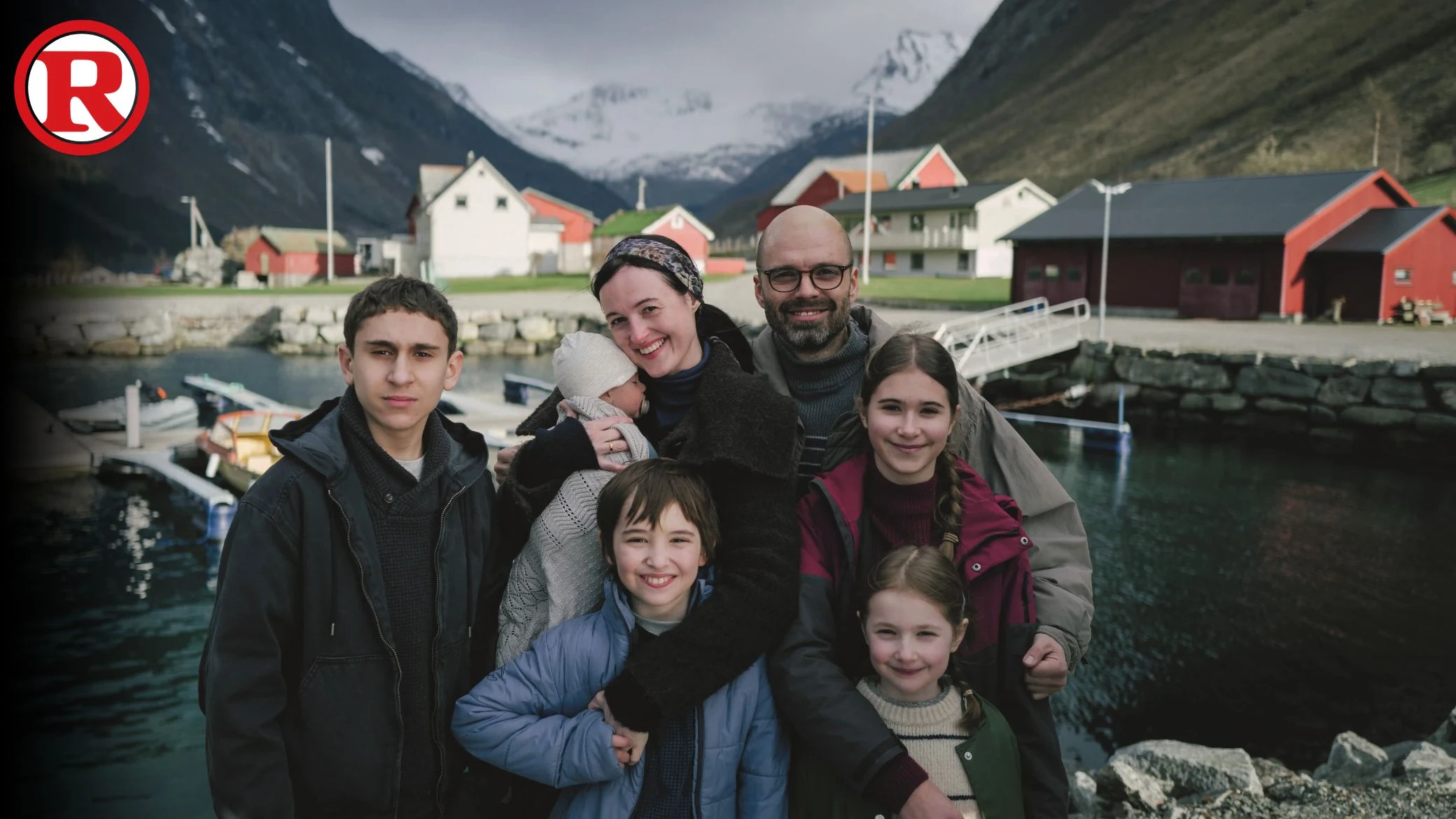
Fjord is a 2026 psychological family drama and legal thriller from Romania, France, Norway, Sweden, Denmark, and Finland. The film was written and directed by Cristian Mungiu, known for 4 Months, 3 Weeks and 2 Days, Graduation, and R.M.N. It stars Sebastian Stan, Renate Reinsve, Lisa Carlehed, Ellen Dorrit Petersen, Lisa Loven Kongsli, Henrikke Lund-Olsen, and Vanessa Ceban.
The story follows Mihai and Lisbet Gheorghiu, a devout Romanian-Norwegian couple who move with their five children to a remote Norwegian village. Their new life changes when bruises are discovered on their teenage daughter Elia.
Authorities begin questioning the family’s strict parenting methods. The investigation eventually becomes a legal and social conflict involving child welfare, cultural differences, religion, and competing ideas about parental rights. The film is an original story and is not based on a book or true story.
Fjord premiered in Competition at the Cannes Film Festival on May 18, 2026, where it won the Palme d’Or. NEON is releasing the film theatrically in the United States on October 9, 2026.
Fjord Age Rating
Fjord does not currently have a verified official U.S. MPA rating. NEON lists the movie for theatrical release on October 9, 2026, but an MPA classification was not available in the current official listing.
In the United Kingdom, festival screenings have carried a 15 certificate. Tyneside Cinema lists the film as 15 with content information including domestic abuse references and a scene of self-harm.
International classifications also indicate mature material. New Zealand’s International Film Festival lists Fjord as M, suitable for mature audiences aged 16 and over, with warnings for child sexual abuse, offensive language, self-harm, and suicide themes.
Based on these classifications and the documented content warnings, parents should treat Fjord as a mature teen/adult drama, rather than a conventional family film.
Violence & Peril
The violence is mostly psychological and domestic rather than action-based. The central concern involves allegations that the children may have been physically mistreated by their parents.
The film discusses and investigates bruises found on Elia. The physical discipline itself is not presented as prolonged graphic violence. Instead, the audience sees the consequences through conversations, investigations, testimony, and reactions from family members and officials.
There are tense confrontations involving parents, authorities, and other members of the community. These scenes can feel threatening because the family faces the possibility of losing their children.
A scene of self-harm is specifically identified in the UK screening information. This makes the film unsuitable for younger viewers who may be sensitive to self-injury.
Language
The language is strong and occasionally offensive. The film contains heated arguments and confrontational dialogue involving family members, officials, and members of the local community.
Some characters use insulting or hostile language during disputes about parenting, religion, culture, and child protection. The language contributes to the film’s tense atmosphere.
New Zealand festival guidance specifically lists offensive language among the film’s content warnings.
Mature Themes
The mature themes are very strong and are the main reason parents should exercise caution. The story centers on allegations of child abuse and the removal of children from their parents.
Child sexual abuse is specifically included in the New Zealand Film Festival’s content warning. The subject is part of the film’s broader child-protection context and should be considered a significant warning for families.
The film also explores domestic abuse, physical punishment, parental control, religious beliefs, cultural differences, and the psychological impact of being investigated by authorities.
Self-harm is another significant subject. A UK festival listing specifically warns about a scene involving self-harm, while the New Zealand classification also warns about self-harm and suicide themes.
The film examines grief, family separation, fear, social judgment, institutional intervention, and the emotional consequences of accusations. Much of the tension comes from uncertainty about whom the audience should believe.
Religion and cultural identity are also central themes. The Gheorghius’ conservative Christian beliefs clash with the social expectations of their Norwegian community. The film explores these differences without reducing the conflict to a simple good-versus-bad argument.
Sexual content appears to be limited compared with the film’s heavier themes. There are adult relationship discussions and references to private family matters, but the available classifications do not identify explicit sexual content as a major concern.
Parents should also expect emotionally difficult material involving children, family separation, legal proceedings, and allegations of abuse. These themes may be more disturbing than the film’s limited physical violence.
Is Fjord Suitable for Teens?
Ages 12–14: No. Fjord is not recommended for most younger teenagers. The subject matter involves child abuse allegations, self-harm, suicide themes, and intense family conflict.
Even without frequent physical violence, the emotional subject matter is considerably heavier than a typical teen drama.
Ages 15–17: With Guidance. Older teenagers may be able to watch the film with parental guidance. The UK classification is 15, while several international screenings use 15+ or 16+ guidance.
Parents should discuss the film beforehand if the teenager may be affected by child-abuse or self-harm themes. The lengthy courtroom and family-conflict scenes also require considerable emotional maturity.
Ages 18+: Yes. Adults are the intended audience for the film’s difficult themes. Viewers should still be prepared for disturbing discussions involving child abuse, self-harm, suicide, and family separation.
Final recommendation: Fjord is best suited to ages 16 and older, with parental guidance recommended for younger viewers.
What Parents Can Do
- Explain before watching that the story deals with allegations of child abuse and child-protection investigations.
- Discuss self-harm and suicide themes carefully, especially with teenagers who may find these subjects personally upsetting.
- After viewing, discuss the film’s questions about parenting, cultural differences, religious beliefs, institutional power, and how accusations can affect families.
Official Trailer
FAQs
Q: Is Fjord suitable for kids or young teenagers?
A: No. The film deals with child abuse allegations, self-harm, suicide themes, offensive language, and intense family separation. These subjects make it unsuitable for children.
Q: Does Fjord contain violence?
A: The film has limited physical violence compared with action movies. However, it contains domestic-abuse references, disturbing allegations involving children, tense confrontations, and a self-harm scene.
Q: Does Fjord contain strong language?
A: Yes. Offensive and heated language appears during arguments and confrontational scenes. New Zealand’s festival classification specifically lists offensive language.
Q: Does Fjord contain sexual content?
A: Sexual content is not a major focus of the film. However, the story deals with highly sensitive subjects involving children and abuse, including a specific child sexual abuse warning in the New Zealand classification.
Q: Where can I watch Fjord?
A: NEON is releasing Fjord theatrically in the United States on October 9, 2026.