
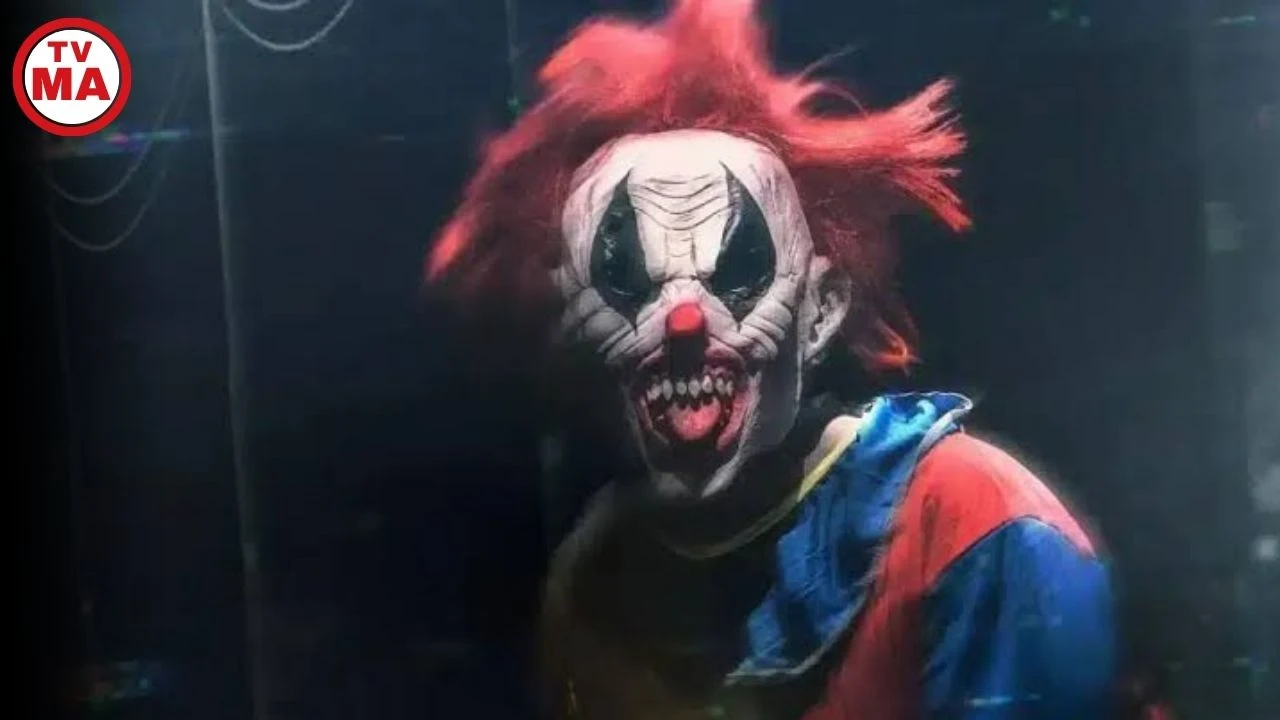
Clown Panic (2026) is an American documentary about the 2016 creepy-clown panic that spread across the United States. The film combines documentary, true-crime, social commentary, and psychological horror elements.
It is directed by Oscar-nominated filmmaker Ed Perkins, known for The Princess and Tell Me Who I Am. The documentary is produced by Lightbox founders Jonathan Chinn and Simon Chinn, with Suzanne Lavery serving as executive producer.
The film revisits reports of clowns appearing near woods, schools, roads, and neighborhoods in 2016. Those reports quickly developed into school lockdowns, police investigations, viral videos, and widespread media coverage.
The documentary examines how fear, social media, misinformation, and public anxiety turned strange sightings into a national and international panic. Hulu lists the film for October 12, 2026, as part of its Huluween lineup.
Clown Panic Age Rating
Clown Panic is listed as TV-MA, meaning it is intended for mature audiences and may be unsuitable for viewers under 17. The documentary contains disturbing clown imagery, frightening real-world footage, threats, tense confrontations, and strong language. The film’s subject matter also involves children, alleged stalking, public fear, police activity, and the consequences of mass hysteria.
Violence & Peril
The violence is mainly presented through real archival material rather than staged horror scenes. The documentary includes footage and reports involving threatening people dressed as clowns, confrontations, police responses, and frightened members of the public.
The subject itself can feel threatening because the clowns are often presented as mysterious figures appearing near homes, roads, schools, or wooded areas. Some archival material involves people carrying weapons or responding aggressively to perceived threats.
The trailer is particularly focused on fear and unsettling imagery. It includes creepy clown appearances and references to children being frightened by people in clown costumes. Contemporary coverage describes the trailer as frightening and especially difficult for viewers with coulrophobia.
There is no indication that graphic gore is a major part of the documentary. However, real-world threats can feel more disturbing because the footage is presented as part of an actual historical panic.
Language
Strong language is a concern. The documentary uses real archival material, interviews, news footage, and internet videos from the 2016 panic. Such material can contain profanity from frightened, angry, or emotional people.
Parents should expect some strong language rather than assuming the documentary is family-friendly because it is nonfiction. The trailer itself also uses casual and darkly humorous language while discussing the frightening clown phenomenon.
Mature Themes
The main mature theme is collective fear and psychological panic. The documentary explores how rumors, social media, news coverage, and online activity can turn isolated incidents into widespread public hysteria.
It also discusses children reporting frightening encounters, school lockdowns, police investigations, stalking fears, public threats, misinformation, and social hostility. These subjects may be unsettling for younger viewers.
There is no significant sexual content or nudity indicated in the available material. Substance use is also not a major part of the documentary’s premise or trailer.
The strongest concern is psychological rather than sexual. Children who are particularly sensitive to clowns, stalking, kidnapping fears, or real-world danger may find the documentary disturbing.
Is Clown Panic Suitable for Teens?
Ages 13–15: No. Clown Panic is not recommended for most younger teenagers. The realistic footage, threatening clown imagery, reports involving children, and discussion of public panic may be too intense.
Ages 16–17: With Guidance. Older teens may be able to watch the documentary with parental guidance. However, parents should consider their teen’s tolerance for frightening real-world footage and strong language.
Ages 18+: Yes. Adults should have no age-related concern beyond the documentary’s mature subject matter. Viewers who dislike clowns or unsettling real-world stories should still approach it cautiously.
Final recommendation: Clown Panic is best suited to older teens and adults, preferably ages 16+ with guidance.
What Parents Can Do
- Explain the real history first: Tell younger viewers that the documentary examines a 2016 panic involving reported clown sightings, rumors, and copycat incidents.
- Discuss fear and misinformation: Parents can explain how social media and repeated news coverage can make frightening stories appear larger or more widespread.
- Talk afterward: Ask teens whether they think the media, internet users, and public reactions helped increase the panic. This can turn the documentary into a useful discussion about online behavior.
Official Trailer
FAQs
Q: What is the age rating for Clown Panic (2026)?
A: Clown Panic is rated TV-MA, making it intended for mature audiences. The main concerns are frightening imagery, disturbing real-world material, threats, and language.
Q: Is Clown Panic suitable for kids?
A: No. The documentary is not recommended for children because of its frightening clown imagery, real-world threats, and mature themes.
Q: Is Clown Panic suitable for teenagers?
A: Older teenagers may be able to watch it with parental guidance. Younger teens may find the documentary’s realistic footage and discussion of child endangerment and public panic distressing.
Q: Does Clown Panic have scary or violent scenes?
A: Yes. The documentary features unsettling clown footage, reports of threatening encounters, police activity, and tense real-world situations. Graphic gore does not appear to be a major focus.
Q: Where can I watch Clown Panic?
A: Clown Panic premieres on Hulu on October 12, 2026, as part of Huluween. It is also scheduled for Hulu on Disney+ for eligible U.S. subscribers and Disney+ internationally.