
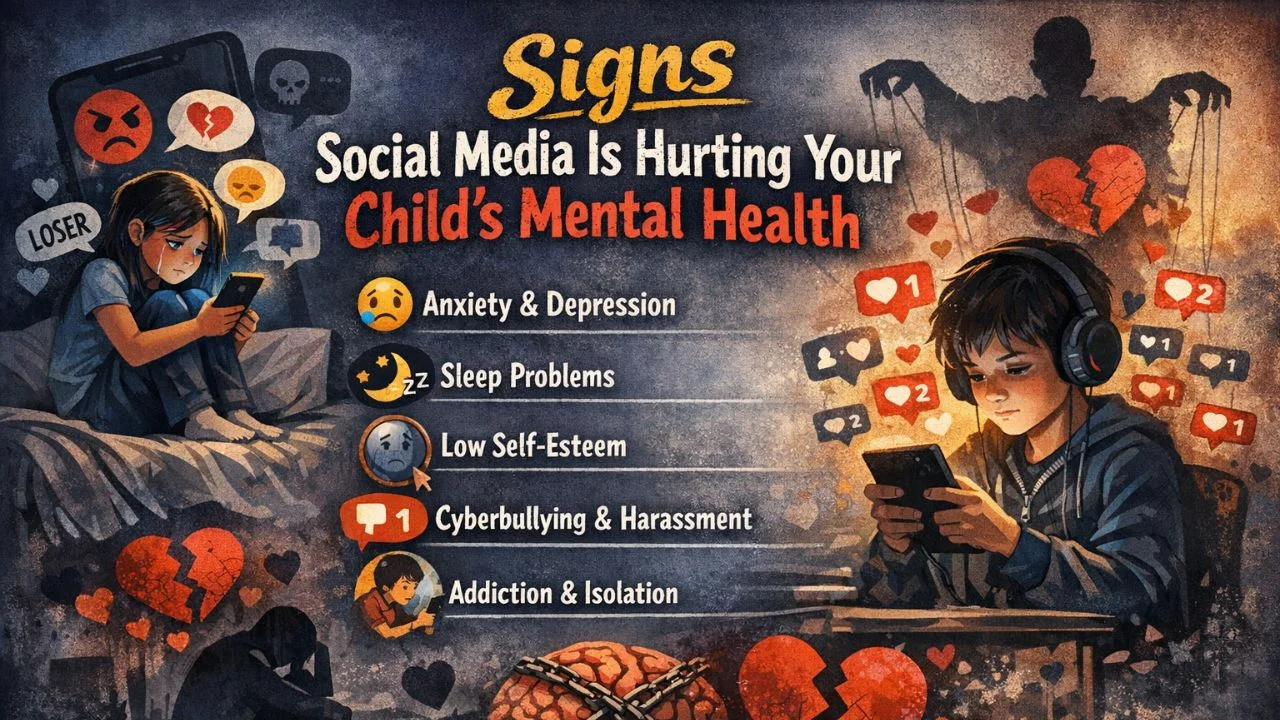
A Research-Backed Guide for Parents
Social media is everywhere. Your child probably wakes up scrolling through TikTok and falls asleep watching Instagram Reels. It feels normal — because for this generation, it is. But here’s what a lot of parents don’t realize: what looks like a harmless habit might actually be chipping away at your child’s mental health, sometimes in ways that are very hard to spot.
The good news? Once you know the warning signs, you can do something about it. This article breaks down the key signs to watch out for, backed by research from leading medical and health organizations. You’ll also find the source links at the end of each section so you can dig deeper if you want.
⚠️ Important Note: This article is for informational purposes only. If you are seriously concerned about your child’s mental health, please consult a licensed mental health professional.
First, How Big Is This Problem Really?
Let’s start with the numbers, because they’re eye-opening.
According to the U.S. Surgeon General’s Advisory, children and adolescents who spend more than 3 hours a day on social media face double the risk of experiencing depression and anxiety symptoms. And here’s the scary part — a recent survey found that the average American teenager spends about 3.5 hours a day on social media. That means most teens are already in that high-risk zone.
A 2024 report from the World Health Organization (WHO) surveyed nearly 280,000 young people aged 11–15 across 44 countries. It found that more than 1 in 10 adolescents (11%) showed signs of problematic social media behavior — meaning they struggled to control their use and experienced real negative consequences in their daily lives. Rates had jumped from 7% in 2018 to 11% in 2022, a sharp rise in just four years.
A comprehensive scoping review published in the National Library of Medicine, which analyzed studies from 2014 to 2024, found that frequent social media use was strongly associated with lower self-esteem, depressive symptoms, anxiety, and other mental health challenges in children.
10 Warning Signs You Should Never Ignore
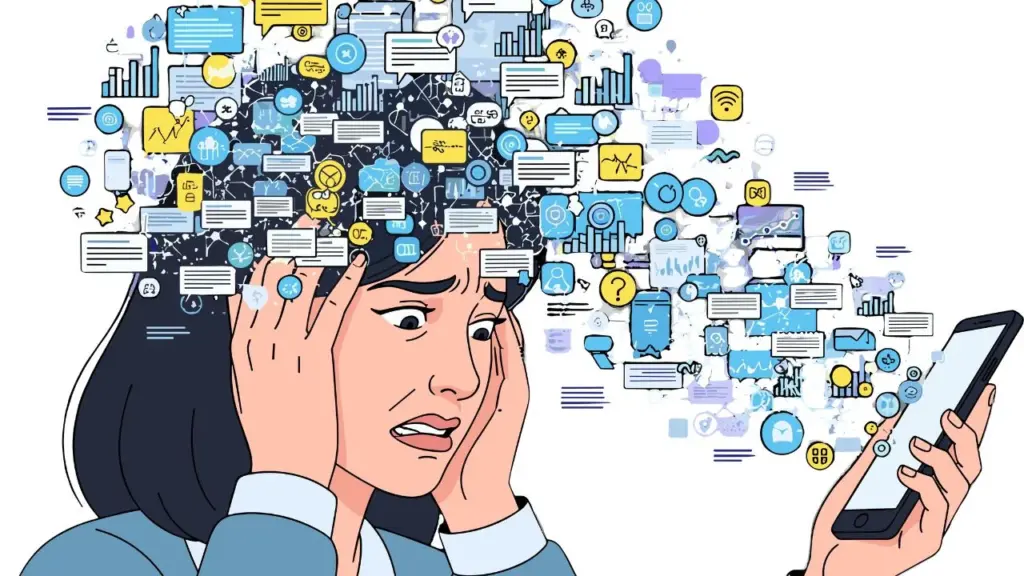
Sign #1: Your Child’s Mood Changes After Using Social Media
This is one of the most telling signs. If your child seems happy or neutral before picking up their phone, but irritable, sad, or anxious after putting it down — that’s a red flag.
According to Johns Hopkins Medicine, research shows that those who are more depressed tend to use social media more, and vice versa. Excessive social media use is associated with behaviors like poor sleep, increased social comparisons, and exposure to cyberbullying and negative content — all of which can contribute to worsening depressive symptoms.
What to watch for:
- Crying or snapping at family members right after using their phone
- Saying things like “everyone hates me” or “I’m so ugly” after being online
- Becoming defensive or upset when you ask them what they were looking at
Sign #2: They’re Not Sleeping Well Anymore
Sleep problems are one of the clearest and most well-documented links between social media and mental health damage. According to Yale Medicine, research shows that nearly one-third of adolescents report using screen media until midnight or later on a typical weekday.
The science is straightforward: the blue light from phone screens suppresses melatonin, the hormone that makes us sleepy. Late-night scrolling delays the body clock, reducing total sleep time during critical years of brain development. For teens, poor sleep doesn’t just mean tiredness — it’s linked to emotional health issues and a higher risk for depression and even suicide.
According to a 2025 analysis published in the National Library of Medicine, problematic social media use has been strongly associated with less sleep, later bedtimes, and excessive daytime drowsiness in adolescents.
What to watch for:
- Your child is staying up past midnight on their phone
- Tired or groggy every morning, even on weekends
- Dark circles under the eyes, difficulty concentrating during the day
- Hiding their phone under the pillow at night
Sign #3: They’re Constantly Comparing Themselves to Others
Social media is essentially a highlight reel — everyone posts their best selfies, vacation photos, and happiest moments. When your child scrolls through this all day, their brain starts comparing their real, messy life to everyone else’s polished online version. And it almost never ends well.
According to the U.S. Surgeon General’s Advisory, 46% of adolescents aged 13–17 said social media makes them feel worse about their own body image. For teen girls, internal research from Meta (leaked in the “Facebook Files”) revealed that Instagram made 32% of teen girls feel worse about their bodies — and the company was aware of this.
A 2025 research paper published in MDPI noted that a systematic scoping review found social media use was strongly associated with body image concern and dissatisfaction, as well as eating behaviors including behaviors linked to eating disorders — especially in young adolescent girls with lower self-esteem.
What to watch for:
- Constant negative comments about their own appearance: “I’m too fat,” “I’m ugly,” “I wish I looked like her”
- Obsessively editing or deleting photos they post
- Avoiding meals, skipping food, or developing secretive eating habits
- Asking for cosmetic changes or expressing extreme dissatisfaction with how they look
Sign #4: They’re Withdrawing from Real Life
There’s a big difference between a teenager who naturally needs alone time and one who is slowly disappearing from family and friend life because they’d rather be online. If your child is ditching hobbies, skipping family meals, or cancelling plans with friends to stay on their phone, this is a serious warning sign.
The Mayo Clinic notes that when social media use interferes with activities, sleep, meals, or homework on a regular basis — it has crossed into a clinical concern. According to their guidance, signs that warrant speaking to a healthcare professional include: using social media even when wanting to stop, using it so much that school or relationships suffer, and spending far more time on platforms than intended.
What to watch for:
- Quitting sports, clubs, or hobbies they used to love
- Refusing to put the phone down even during meals or family time
- Preferring online friends over in-person relationships
- Getting extremely upset or panicky when their phone is taken away
Sign #5: Their Grades Are Slipping
Social media is designed to be addictive. Likes and comments trigger a dopamine release in the brain — similar to what happens with addictive substances. Teen brains are especially sensitive to these rewards. As a result, it becomes very hard for kids to focus on studying or homework when a more immediately rewarding activity is just a tap away.
According to a 2025 study published in PMC (National Library of Medicine), excessive social media use is linked to compulsive behavior and an increased risk of developing psychiatric symptoms. The same research points out that social media’s constant content-switching reduces a child’s ability to sustain attention and focus on single tasks — which is a core requirement for learning.
What to watch for:
- A sudden drop in grades or school performance
- Incomplete assignments or forgotten homework
- Your child is using their phone while supposedly doing homework
- Teacher reports of inattention or distraction in class
Sign #6: They Show Signs of Anxiety You Can’t Explain
Psychologists have a term for a specific kind of anxiety that social media creates: “ambient anxiety.” It’s a constant low-level stress that comes from being always connected — the feeling that you can never fully relax because someone might message you, or you might miss something important.
South Denver Therapy’s 2025 research summary describes this well: every post a teen makes becomes a mini performance review — will people like it? Will it get enough comments? Did I say the wrong thing? This feedback loop makes teens hyper-focused on external validation in a way that fuels anxiety.
The WHO’s 2024 report also highlighted that problematic social media behavior was defined by addiction-like symptoms, including an inability to control use, experiencing withdrawal symptoms when not using it, and facing negative consequences in daily life.
What to watch for:
- Constant checking of notifications, even in short gaps like during a meal
- Visible anxiety or distress if they can’t access their phone
- Obsessively worrying about what others think of their posts
- Difficulty relaxing or being present in the moment
Sign #7: They’re Being Bullied Online (Cyberbullying)
Cyberbullying is one of the most damaging things that can happen to a child online — and it’s more common than most parents think. Unlike traditional schoolyard bullying that ends when the school bell rings, cyberbullying follows kids home. Screenshots get shared, comments stay visible, and the harassment can feel inescapable.
Research from South Denver Therapy reports that nearly 46% of teens have experienced some form of cyberbullying — including offensive name-calling, false rumors being spread, receiving unwanted explicit images, physical threats, or having embarrassing photos shared without permission.
A research paper published in PMC found that cyberbullying victimization is connected with higher rates of self-harm, suicidal ideation, sadness, and anxiety in teenagers. The researchers also noted that even being a bystander who witnesses cyberbullying increases stress and anxiety levels.
What to watch for:
- Sudden avoidance of their phone after previously being glued to it
- Becoming upset, tearful, or very quiet after checking their phone
- Refusing to talk about what’s happening online
- Not wanting to go to school — especially if the bullying involves classmates
- Closing screens quickly when you walk by
Sign #8: They’re Exposed to Harmful or Dangerous Content
Social media algorithms are built to show you more of what you engage with. If a teenager starts watching videos about weight loss, depression, or self-harm — even just out of curiosity — the algorithm will keep feeding them more. This is not a small problem.
According to Yale Medicine, quoting research cited in the U.S. Surgeon General’s advisory, social media algorithms built around mental health content like depression or suicide can make a teen feel like “everyone around them is depressed or thinking about suicide” — which is not healthy for developing minds.
A 2025 PMC paper on social media and adolescent mental health also noted that social media exposure is closely linked to adolescent risk behaviors — including alcohol and drug use — because teens frequently encounter depictions of such behaviors on platforms like TikTok and Instagram.
What to watch for:
- Finding content about self-harm, suicide, eating disorders, or drugs on their phone
- Talking about dangerous “challenges” they’ve seen online
- Glorifying or romanticizing risky behaviors
- Being very secretive about what they watch
Sign #9: They Talk Negatively About Themselves More Often
Low self-esteem is one of the most documented mental health outcomes of heavy social media use. When a child repeatedly compares their looks, social life, and achievements to the perfectly curated profiles they see online, their sense of self-worth takes a hit.
A systematic scoping review published in PMC that analyzed data from 2014 to 2024 found that frequent social media use was strongly associated with lower self-esteem and depressive symptoms in children. Girls in particular are disproportionately affected.
According to the American Academy of Pediatrics (via HealthyChildren.org), passive social media use — meaning just scrolling and consuming content without actively engaging — is specifically linked to a higher likelihood of depression symptoms. Active use, like creating posts or commenting, shows less negative impact. So the type of use matters a lot.
What to watch for:
- Saying things like “I’m worthless,” “Nobody likes me,” or “I wish I was different”
- Refusing to participate in activities because they fear judgment
- Excessive self-criticism about appearance, intelligence, or popularity
Sign #10: You Notice Physical Symptoms — Headaches, Fatigue, Poor Posture
Mental health and physical health are closely connected. When social media is affecting your child’s mental well-being, it often shows up in the body too. A scoping review on children’s social media use published in the National Library of Medicine listed physical consequences that frequently co-occur with heavy use: sleep difficulties, eye problems (myopia, eye fatigue, dryness), headaches, reduced physical activity, and even poor nutrition due to unhealthy food marketing on social platforms.
What to watch for:
- Frequent headaches or eye strain
- Slouching or neck pain from looking at screens
- Skipping exercise or outdoor activities in favour of screen time
- Picking up unhealthy eating habits — more junk food, less interest in meals
What Can You Do About It? Practical Steps for Parents
Recognizing the problem is the first step. Here’s what trusted medical and research organizations recommend:
1. Set screen time limits — together. According to a 2024 study in JAMA Pediatrics, teens who reduced their social media use to just 30 minutes per day showed significant decreases in depression and loneliness in as little as three weeks. Rather than imposing rules top-down, create boundaries together. Kids are more likely to follow rules they helped make.
2. Make bedrooms phone-free at night. The Mayo Clinic recommends setting rules that prevent social media from interfering with sleep. A simple rule: phones charge in a common area, not in bedrooms.
3. Talk — don’t lecture. Start conversations about what your child sees and feels online. Ask open-ended questions. The American Academy of Pediatrics recommends creating a family media use plan that includes discussions about privacy, strangers online, and how to report cyberbullying.
4. Model healthy behavior. Kids learn from watching their parents. If you’re glued to your phone at the dinner table, your child will think that’s normal. When parents model healthy use, teens respond better to limits.
5. Seek professional help if needed. If you’re seeing multiple warning signs — especially mood changes, sleep problems, withdrawal, or self-harm — please don’t wait. Talk to your child’s pediatrician or a licensed mental health professional who specializes in adolescent mental health.
The U.S. Surgeon General has recommended that social media platforms carry warning labels, similar to those on cigarettes. Until legislation catches up, parents are the first line of defense.
Final Thoughts
Social media isn’t going away. But that doesn’t mean your child has to be hurt by it. The research is clear: heavy, unmonitored social media use is linked to real, measurable harm to children’s mental health — from depression and anxiety to sleep loss, body image issues, and cyberbullying.
But the research is also hopeful: even small reductions in screen time can make a meaningful difference. And children who have open, supportive relationships with their parents are far better equipped to navigate the online world safely.
You don’t need to take the phone away forever. You just need to stay informed, stay present, and keep the lines of communication open.
References
1. U.S. Surgeon General’s Advisory — Social Media and Youth Mental Health: https://www.hhs.gov/surgeongeneral/reports-and-publications/youth-mental-health/social-media/index.html
2. World Health Organization (WHO) — Teens, Screens and Mental Health (Sept 2024): https://www.who.int/europe/news/item/25-09-2024-teens–screens-and-mental-health
3. Johns Hopkins Medicine — Social Media and Mental Health in Children and Teens: https://www.hopkinsmedicine.org/health/wellness-and-prevention/social-media-and-mental-health-in-children-and-teens
4. Mayo Clinic — Teens and Social Media Use: What’s the Impact? (Dec 2025): https://www.mayoclinic.org/healthy-lifestyle/tween-and-teen-health/in-depth/teens-and-social-media-use/art-20474437
5. Yale Medicine — How Social Media Affects Your Teen’s Mental Health (June 2024): https://www.yalemedicine.org/news/social-media-teen-mental-health-a-parents-guide
6. HealthyChildren.org (American Academy of Pediatrics) — Social Media & Your Child’s Mental Health: What the Research Says: https://www.healthychildren.org/English/family-life/Media/Pages/social-media-and-your-childs-mental-health-what-research-says.aspx
7. PMC (National Library of Medicine) — The Impact of Social Media on Children’s Mental Health: A Systematic Scoping Review (2024): https://pmc.ncbi.nlm.nih.gov/articles/PMC11641642/
8. PMC — The Impact of Social Media & Technology on Child and Adolescent Mental Health (2025): https://pmc.ncbi.nlm.nih.gov/articles/PMC12165459/
9. PMC — Effects of Social Media Use on Youth and Adolescent Mental Health: A Scoping Review of Reviews (2025): https://pmc.ncbi.nlm.nih.gov/articles/PMC12108867/
10. PMC — The Impact of Social Media on the Mental Health of Adolescents and Young Adults: A Systematic Review: https://pmc.ncbi.nlm.nih.gov/articles/PMC10476631/
11. PMC — The Use of Social Media in Children and Adolescents: Scoping Review on the Potential Risks: https://pmc.ncbi.nlm.nih.gov/articles/PMC9407706/
12. South Denver Therapy — Social Media and Mental Health Statistics 2025: https://www.southdenvertherapy.com/blog/social-media-mental-health-statistics