
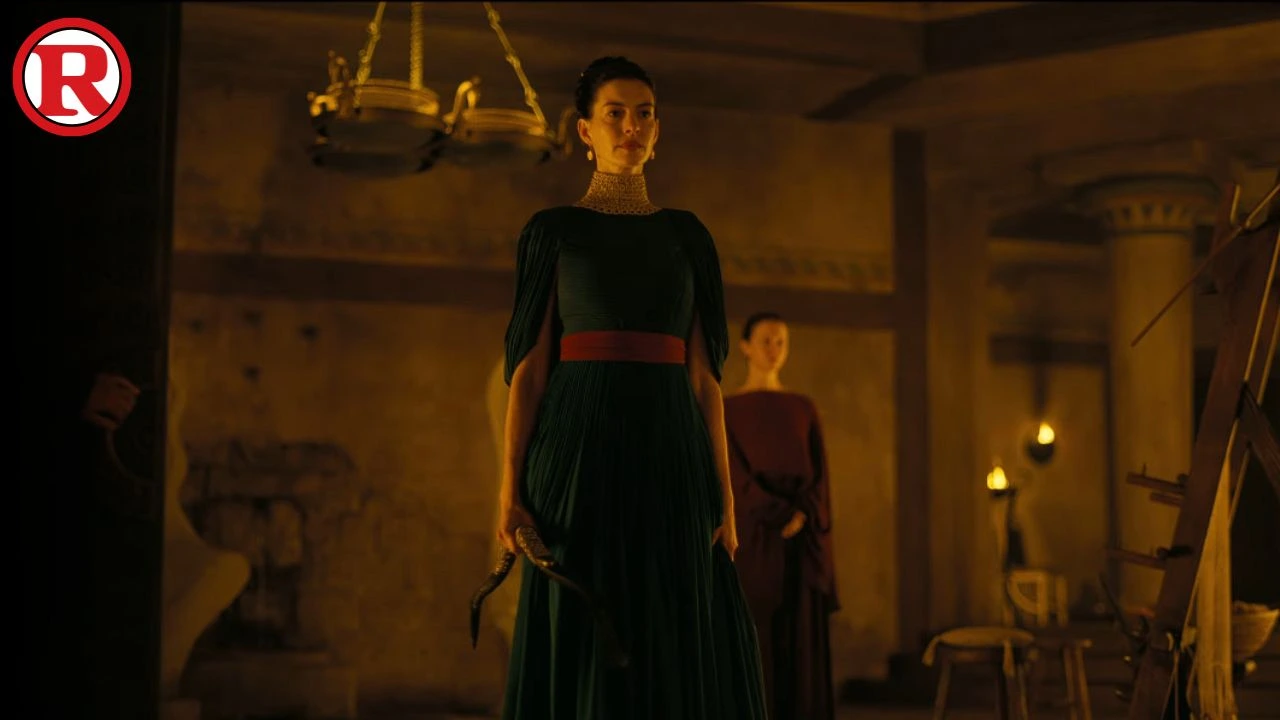
The Odyssey is a 2026 epic fantasy action film written and directed by Christopher Nolan — his first major theatrical release since his Academy Award-winning Oppenheimer (2023). The film is produced by Emma Thomas and Christopher Nolan through their production company Syncopy, in association with Universal Pictures and Wildside.
The film boasts one of the most extraordinary ensemble casts assembled for a single film in recent Hollywood history. Matt Damon (Good Will Hunting, The Martian) stars as Odysseus, the legendary King of Ithaca. Tom Holland (Spider-Man: No Way Home) plays Telemachus, Odysseus’ son. Anne Hathaway (The Dark Knight Rises, Les Misérables) portrays Penelope, Odysseus’ devoted wife. Robert Pattinson (The Batman, Tenet) plays Antinous, the lead suitor.
Zendaya (Dune) appears as Athena, goddess of wisdom. Charlize Theron (Mad Max: Fury Road) plays Calypso. Lupita Nyong’o (Black Panther) portrays Helen of Troy. The cast also includes Jon Bernthal as Menelaus, Samantha Morton as Circe, Mia Goth as Melantho, John Leguizamo as Eumaeus, Himesh Patel as Eurylochus, Benny Safdie as Agamemnon, and Elliot Page and Ryan Hurst in undisclosed roles.
The story follows Odysseus on his ten-year journey home to Ithaca after the Trojan War, as he faces terrifying obstacles including the Cyclops, the Sirens, and other mythological sea monsters that stand between him and the people he loves. Nolan presents this as a massive non-linear survival epic — a high-stakes meditation on time, memory, and the cost of war — delivered with the intensity of Dunkirk and the mythological grandeur of Gladiator.
Nolan has stated his intention was to create the “most extreme version of a story possible” — a vision reflected in every aspect of the film’s production, from its harrowing scenes at sea to its large-scale practical battle sequences.
The Odyssey releases globally in theaters on July 17, 2026.
The Odyssey Age Rating
The Odyssey is officially rated R by the MPA (Motion Picture Association) for “violence and some language.” The R rating means no one under 17 is admitted in theaters without a parent or adult guardian. While the language is unlikely to be a primary factor in this rating given the film’s ancient source material, the film is expected to be filled with brutal action sequences featuring enough intensity and violence to fully earn the R rating.
Violence & Peril
The Odyssey contains heavy and sustained war violence and battle sequences throughout its nearly three-hour runtime. The film features the high-stakes tension of Dunkirk applied to Greek mythology — meaning the violence is realistic, visceral, and relentless rather than stylized or sanitized. Specific violent content includes large-scale Trojan War battle sequences with swords, spears, and hand-to-hand combat, resulting in on-screen deaths and bloodshed.
The Cyclops sequence has already become one of the most talked-about aspects of the film, described as a psychological nightmare — Nolan’s famous commitment to practical effects means the creature sequences are genuinely terrifying rather than animated.
Explosions and large-scale destruction are present throughout the film’s battle and sea sequences. The suitors’ slaughter sequence — one of Homer’s most famous and brutal passages — is expected to be depicted with significant graphic intensity given the R rating.
Additional creature encounters including the Sirens and Circe’s transformations contribute to the film’s sustained atmosphere of peril and violence. Director Vanicek — who stated he wanted audiences to feel “physically drained” — is echoed here by Nolan’s own production approach, with Matt Damon confirming some of the most intense filming moments were captured almost entirely on set without CGI.
Language
The MPA rating specifically cites “some language” as a contributing factor to the R rating. The film contains strong language, including words such as “bastard” and other period-appropriate strong expressions used during battle and dramatic confrontations. Language is not pervasive but is present throughout the film’s most intense sequences.
Sexual Content & Romance
The film contains a kissing scene between characters, consistent with the romantic dimensions of the original epic. The source material includes Odysseus’ affairs with Circe and Calypso — two of the poem’s most famous romantic subplots — and Nolan’s adaptation is expected to address these relationships, though based on the R-for-violence rating, explicit sexual content does not appear to be a significant element of the theatrical cut. The romantic content appears to be tasteful and dramatically motivated rather than graphic.
Alcohol & Substance Use
The film contains multiple scenes featuring alcohol consumption, consistent with the ancient Greek setting and the epic’s source material. Characters are depicted drinking wine and spirits in feasting and celebration sequences throughout the narrative.
Mature Themes
The Odyssey engages with some of the most profound and enduring themes in all of human storytelling. These include the psychological and emotional cost of war, grief and loss, identity and the nature of home, loyalty and betrayal, divine intervention and human helplessness, and the existential weight of a decade-long separation from everyone one loves.
The film also addresses PTSD-adjacent themes as Odysseus processes years of war trauma while simultaneously fighting for survival on his journey. Nolan frames the story as an existential meditation on time, memory, and survival — making the thematic content significantly heavier and more psychologically complex than a standard action-adventure epic. The encounters with gods — particularly Athena (Zendaya) — raise questions about fate, free will, and divine manipulation that add additional layers of mature philosophical content.
Is The Odyssey Suitable for Teens?
Ages 10–12: No. The film’s R rating, sustained graphic battle violence, terrifying creature sequences, and nearly three-hour runtime make it entirely inappropriate for younger children. The Cyclops and Siren sequences alone are described as psychological nightmare fuel that would be deeply distressing for this age group.
Ages 13–15: With Strong Parental Guidance. Teens who are already mythology enthusiasts — particularly those familiar with the Percy Jackson series or the original Homeric text — will find the film compelling and accessible, but the R-rated battle violence, intense creature encounters, and psychologically heavy themes require mature emotional preparation. Parents should watch alongside.
Ages 16 and Up: Yes, with Awareness. Older teens and adults who enjoy epic, intelligent, visually overwhelming cinema will find The Odyssey to be one of the defining theatrical experiences of 2026. The war violence and battle sequences are intense but serve the story’s emotional and thematic goals.
Overall, The Odyssey is best suited for viewers ages 16 and older — or younger teens accompanied by a parent who can provide context for both the violence and the mythological themes.
What Parents Can Do
- Do not bring children under 13 to this film — the R-rated battle violence, terrifying practical-effects creature sequences, and nearly three-hour runtime are far beyond what young viewers can process comfortably.
- For older teens, consider using the film as a bridge to reading Homer’s original epic — one of the greatest works in all of world literature — and discussing how Nolan’s choices reflect or depart from the source material.
- Use the film’s themes as a conversation starter about war, loyalty, sacrifice, and what it means to truly come home — themes that are as relevant today as they were in ancient Greece.
Official Trailer
FAQs
Q: What is the age rating for The Odyssey (2026)?
A: The Odyssey is officially rated R by the MPA for “violence and some language.” No one under 17 is admitted in theaters without a parent or adult guardian.
Q: Is The Odyssey appropriate for kids?
A: Not for younger children. The film contains intense battle violence, terrifying creature sequences, and psychologically heavy themes. It is recommended for ages 16 and older, with parental guidance for younger teens.
Q: Does The Odyssey contain graphic violence?
A: Yes. The film features large-scale Trojan War battles, sword fights, creature attacks, and on-screen deaths throughout. The film is expected to be filled with brutal action sequences that fully justify its R rating.
Q: Is The Odyssey based on a true story?
A: The Odyssey is based on Homer’s ancient Greek epic poem of the same name — one of the oldest and most influential works of Western literature, believed to have been composed in the 8th century BC.
Q: Where can I watch The Odyssey (2026)?
A: The Odyssey releases exclusively in theaters on July 17, 2026, distributed by Universal Pictures. It is presented in IMAX at select locations worldwide.
Official Website: The Odyssey