
📋 Research-Based Guide
This guide is built from the official age certificate and its published rating reason, together with the trailer and released material. We have not screened this title ourselves, and we will not describe scenes we have not seen. We are working through our back catalogue and upgrading guides to Verified as fast as we can genuinely watch them. How we rate →
Nintendo has always had a talent for making games that are impossible to explain in a single sentence. Tomodachi Life: Living the Dream is a perfect example. Is it a life simulator? A relationship drama? A comedy? A social experiment? The honest answer is: all of the above, wrapped in pastel colours, absurdist humour, and a cast of customisable cartoon avatars who will, without any warning whatsoever, start arguing about hot dogs.
Released on April 16, 2026 for the Nintendo Switch — more than thirteen years after its beloved predecessor — Tomodachi Life: Living the Dream has landed to enthusiastic reviews and a lot of questions from parents. Is it appropriate for my child? What exactly happens in this game? What does “dating preferences” mean in a Nintendo title? Why is there a flatulence cloud?
This guide answers all of it — honestly, thoroughly, and without the corporate waffle.
What Is Tomodachi Life: Living the Dream?
Before diving into ratings and content, it helps to understand what this game actually is — because it is genuinely unlike most things on the market.
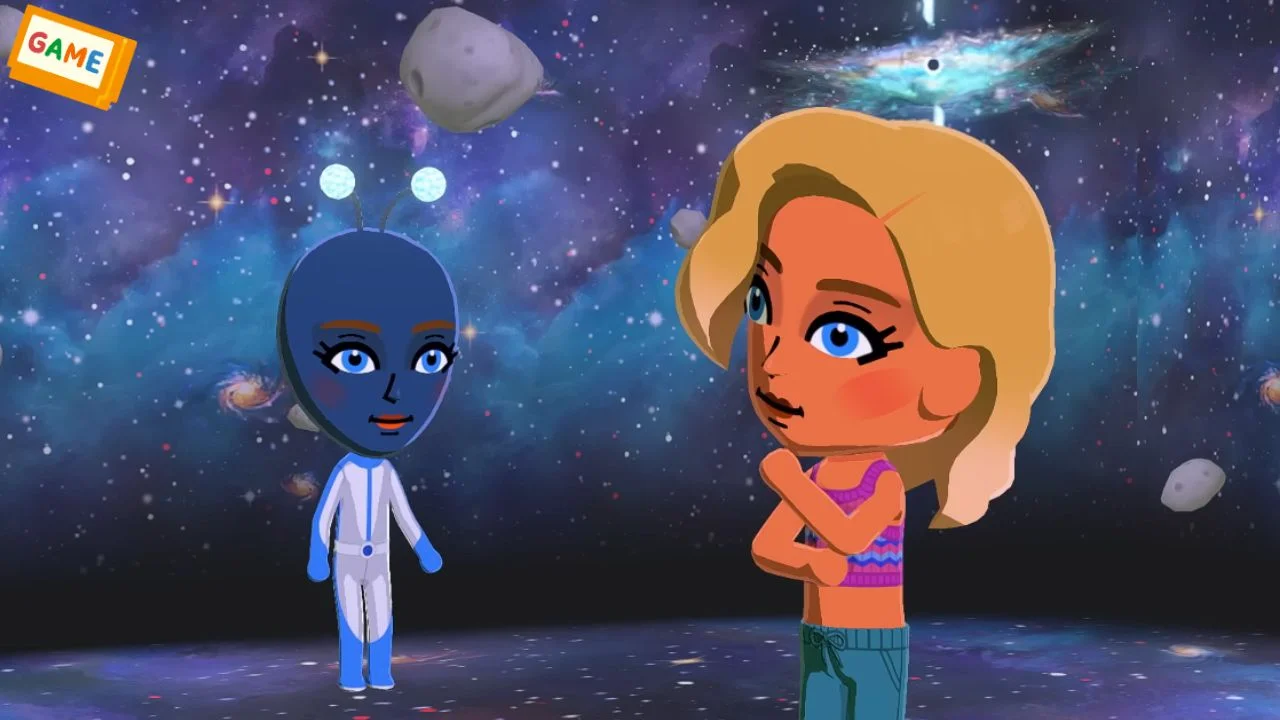
Tomodachi Life: Living the Dream is a social simulation game developed by Nintendo EPD for the Nintendo Switch. It is the third overall entry in the Tomodachi Life series and revolves around user-customisable Mii characters who live on an island overseen by the player, who can give them items and influence their relationships.
Think of it as a digital ant farm crossed with a soap opera — but a very silly one. You design your residents, give them personalities and homes, and then watch them do exactly what they want. They make friends, fall out, develop crushes, get married, have children, dream bizarre dreams, and stage impromptu concerts in the town square. Your role as the player is not to control them directly, but to nudge, advise, feed, clothe, and occasionally intervene when two Miis are in the middle of a heated disagreement about cheese.
The game released on April 16, 2026, just under thirteen years after the release of Tomodachi Life on April 18, 2013. It is also backwards compatible with the Nintendo Switch 2.
Official Age Rating — ESRB
Let’s start with the official verdict from the people whose job it is to assess these things.
Tomodachi Life: Living the Dream is rated E for Everyone by the ESRB, with content descriptors for Comic Mischief and Mild Fantasy Violence.
That’s the most family-friendly rating the ESRB issues — the same category as Mario Kart and Animal Crossing. For context:
- E for Everyone means the game is considered appropriate for all age groups.
- Comic Mischief refers to slapstick, bathroom humour, and silly pranks.
- Mild Fantasy Violence refers to cartoonish, consequence-free combat.
The Family Gaming Database recommends the game for players 6 years and above, noting that good social skills and a willingness to discover what your Miis want are the main requirements for getting the most out of it. Younger players may need help with reading and understanding some of the game’s menus and building unlock conditions.
Content Breakdown — What’s Actually in the Game
Here is a category-by-category breakdown of everything parents need to know.
Violence
Minimal acts of cartoony violence are occasionally seen in the game: fight clouds when characters argue, and turn-based combat against a slime enemy.
That’s it. There is no blood, no injury, no consequence. When two Miis have a falling out, you see a cartoon dust cloud — the kind you’d recognise from a classic animated film — and then they go their separate ways. The combat sequences, when they appear, are brief and colourful, resembling a children’s board game more than anything remotely threatening.
Bathroom Humour
This is where the ESRB’s “Comic Mischief” descriptor earns its place.
The game includes brief instances of bathroom humour: Miis emitting flatulence accompanied by a cloud effect, and a character near a toilet stating, “Ugh! I forgot to think before I sniff.”
It’s silly. It’s gentle. It’s the kind of joke that a seven-year-old will find absolutely hysterical. If your household has a strict no-toilet-humour policy, be aware that the game dips into it occasionally — but it never lingers and it never escalates beyond this level.
Language
There is no strong language in Tomodachi Life: Living the Dream. Miis speak in a gibberish language with text subtitles, and the text itself is always clean and appropriate. The tone throughout is playful, warm, and whimsical.
Alcohol, Drugs & Smoking
None. The game contains no references to alcohol, tobacco, or any substance of any kind.
Scary or Intense Moments
Miis have dreams — and some of them are deliberately surreal and strange. These sequences are a celebrated feature of the series, leaning into absurdist imagery: a Mii floating through a giant bowl of soup, or facing a room full of giant apples. They are odd rather than frightening, and they are always played for laughs.
One dream sequence from the original 2013 game was noted for its mildly unsettling imagery (a Mii head on a keyring), but the tone in Living the Dream leans further into whimsy than eeriness.
Relationships, Romance & Marriage
This is the section most parents will want to read carefully, because it is where Living the Dream differs most significantly from a standard Nintendo title.
Miis can fall in love, date, reject each other, get married, and have children. This is the core social loop of the game, and it has always been part of the Tomodachi experience. What is new — and historically significant — in Living the Dream is how much more inclusive that loop now is.
For the first time in the franchise’s history, Tomodachi Life: Living the Dream lets players create non-binary Mii characters outside of the traditional Male and Female options, with clothing and customisation no longer locked to a specific gender. Players can also define romantic preferences more freely, including options that support same-sex relationships, asexual identities, and aromantic characters.
When creating a character or at any time throughout the game, you can select a Mii’s gender — male, female, or non-binary — choose pronouns, decide which gender your Mii can be romantically interested in, and even choose what style of clothing the Mii will wear for celebratory events. You can also indicate if a Mii is related to any other Mii on the island, to prevent any awkward romances developing between family members.
This is a deliberate and long-promised change. The original 2013 Tomodachi Life drew criticism and a social media campaign called “Miiquality” for its exclusion of same-sex relationships. Nintendo apologised at the time and pledged that any future instalment would be designed to be more inclusive — and with Living the Dream, they have kept that promise.
What does this mean in practice? Two male Miis can fall in love, get married, and have children. Two female Miis can do the same. A non-binary Mii can date any gender. All of this is handled with the same cheerful, cartoon charm as every other aspect of the game. There is no explicit content, no inappropriate imagery — it is the same whimsical relationship simulation, now available to everyone.
Same-sex relationships in Living the Dream are supported with identical mechanics to heterosexual couples.
Verdict for parents: Families who are fully comfortable with LGBTQ+ representation will find this a warm and positive feature. Families with more conservative values should be aware that same-sex relationships and non-binary gender options are present and cannot be turned off — they are simply part of the world the game creates. The content itself is never explicit or mature, but the inclusion is intentional and visible.
Having Children
Married Miis can eventually have babies. The game handles this with total innocence — one of the parents calls you up, asks if they should have a baby, you say yes, and a short time later a baby appears. There is no discussion of how this happens, no biology lesson, nothing remotely adult. It’s handled more like a magical event than anything else.
Children grow up over time and eventually face a choice: settle down on the island as a permanent resident, or leave to travel the world.
Verdict for parents: Completely fine. More whimsy than biology.
Online Features
Living the Dream includes online island visiting, Mii exchange, and collaborative events with friends.
This is a new addition compared to the original game. Players can visit each other’s islands and encounter each other’s Miis. Nintendo has implemented restrictions on image-sharing features, explaining that some out-of-context screenshots or clips could be misinterpreted. Direct social media uploads from the Switch are not available within the game.
Verdict for parents: The online features are relatively contained. As always with any online game feature, it’s worth being aware of what your child shares and with whom.
Is It Appropriate for Your Child?
Here is a simple breakdown by age group:
Ages 4–5: Probably too young to engage meaningfully with the game’s text and menus, but might enjoy watching the Miis move around. Best experienced alongside a parent.
Ages 6–9: Solidly within the target range. Kids this age will love designing Miis, seeing them interact, and experiencing the game’s endless parade of surprising moments. Some may need help with reading or understanding certain menus.
Ages 10–12: An excellent fit. The social simulation aspect, the creativity involved in Mii design, and the unpredictability of island life are all well-matched to this age group.
Ages 13+: Fully appropriate. Teens will get the most out of the game’s humour, the relationship dynamics, and the deeper customisation options. Many older players of the original 2013 game have been waiting over a decade for this sequel.
What Parents Need to Know
Tomodachi Life: Living the Dream is one of those rare games that generates genuine conversation — not just between players and the screen, but between family members watching together. Here are some topics that naturally arise:
Friendships and conflict: Miis argue, make up, and sometimes drift apart. This mirrors real social dynamics and can prompt useful conversations about how relationships work in real life.
Identity and self-expression: The game’s character creation tools allow for remarkable personalisation. This can be a genuinely fun creative exercise for children, encouraging them to think about how people express who they are.
LGBTQ+ representation: For families who want to introduce this topic, the game presents it in an entirely natural, consequence-free way. Same-sex couples in the game are treated identically to any other couple — they date, they marry, they have children, they argue about whether to buy a new sofa. For families who are not yet ready to navigate these conversations, this is worth knowing in advance.
Online safety: If your child engages with the island visiting features, it is worth having the standard conversation about online interactions and privacy.
A Note on the LGBTQ+ Inclusion — For Parents Researching Specifically
Following the controversy surrounding the original 3DS game’s exclusion of same-sex relationships, Nintendo issued an apology and pledged that if it created a next instalment in the Tomodachi series, it would strive to design a gameplay experience from the ground up that is more inclusive and better represents all players.
Fans and gaming journalists alike praised the inclusion of same-sex relationships and non-binary Miis in Living the Dream. The content itself is presented with the same light-hearted innocence as everything else in the game. There is no mature or explicit element to any of it.
Parents should simply be aware that this content exists and is integrated throughout — it is not a toggleable option or a separate mode. It is simply part of the world the game depicts.
Quick Reference Summary
| Category | Content | Rating |
|---|---|---|
| Violence | Cartoon clouds, slime combat | ✅ Very Mild |
| Language | None — Mii gibberish + clean text | ✅ None |
| Bathroom Humour | Occasional flatulence gags | ⚠️ Mild |
| Sexual Content | None | ✅ None |
| Romance / Relationships | Dating, marriage, babies — cartoonish | ⚠️ Whimsical |
| LGBTQ+ Content | Same-sex relationships, non-binary, pronouns | ⚠️ Fully Integrated |
| Scary Scenes | Surreal dream sequences | ✅ Not Scary |
| Online Features | Island visiting, Mii exchange | ⚠️ Parental Awareness |
| Alcohol / Drugs | None | ✅ None |
FAQs
Q. What is the official age rating for Tomodachi Life: Living the Dream?
A: It is rated E for Everyone by the ESRB — suitable for all ages, with Family Gaming Database recommending it for children aged 6 and above.
Q. Is there any violence or scary content in the game?
A: No. Violence is limited to cartoon dust clouds during Mii arguments and brief turn-based combat against a slime enemy — nothing graphic or frightening.
Q. Does the game contain bad language or sexual content?
A: Neither. Language is completely clean, and there is zero sexual content, nudity, or adult themes of any kind.
Q. Does Living the Dream include same-sex relationships?
A: Yes — same-sex couples, non-binary characters, and custom pronouns are fully integrated into the game and handled with the same lighthearted, cartoon charm as everything else.
Q. Can kids play it online with strangers?
A: The game includes online island visiting, but Nintendo has restricted direct image sharing and social media uploads for safety. Parental supervision is still recommended for younger players.